
Floria Chen, a gold lover from mainland China, is leaning in to scan the gold jewelry at the counter, carefully inspecting it under the lighting as she contemplates her selections in a bustling Chow Tai Fook store in Mong Kok.
“Gold prices have performed exceptionally well this year,” Chen said. Believing in the substantial potential for price appreciation, she planned to increase her gold holdings.
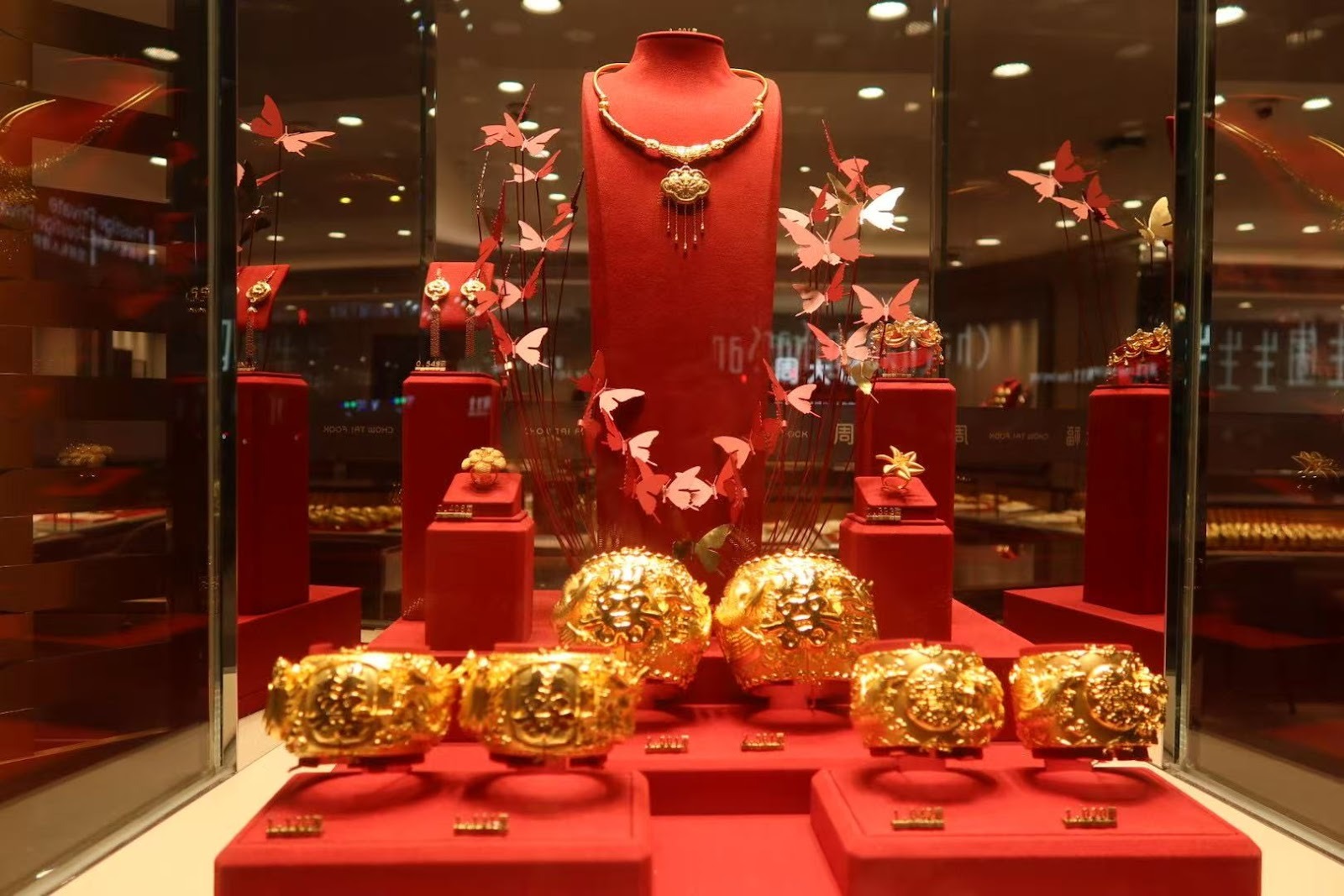
The year 2025 has been record-breaking for gold , one of the most popular and best-performing assets globally. As of Oct. 31, the international gold spot price had surged more than 50% to $4,002.92 per ounce since the beginning of the year, and reached a new historic high at $4381.52 on Oct. 20.
Alongside the rapid rise, the year also features a single-day drop of 5.3%, the largest since 2013, though analysts viewed this as a healthy correction following the metal's relentless climb.
Despite this, analysts say the fundamental drivers behind the strong rise in gold prices remain intact. Looking back to this year’s eye-catching alternative, the volatility always echoes the Federal Reserve's monetary policy shift, escalating geopolitical tensions, and ongoing gold purchases by central banks.
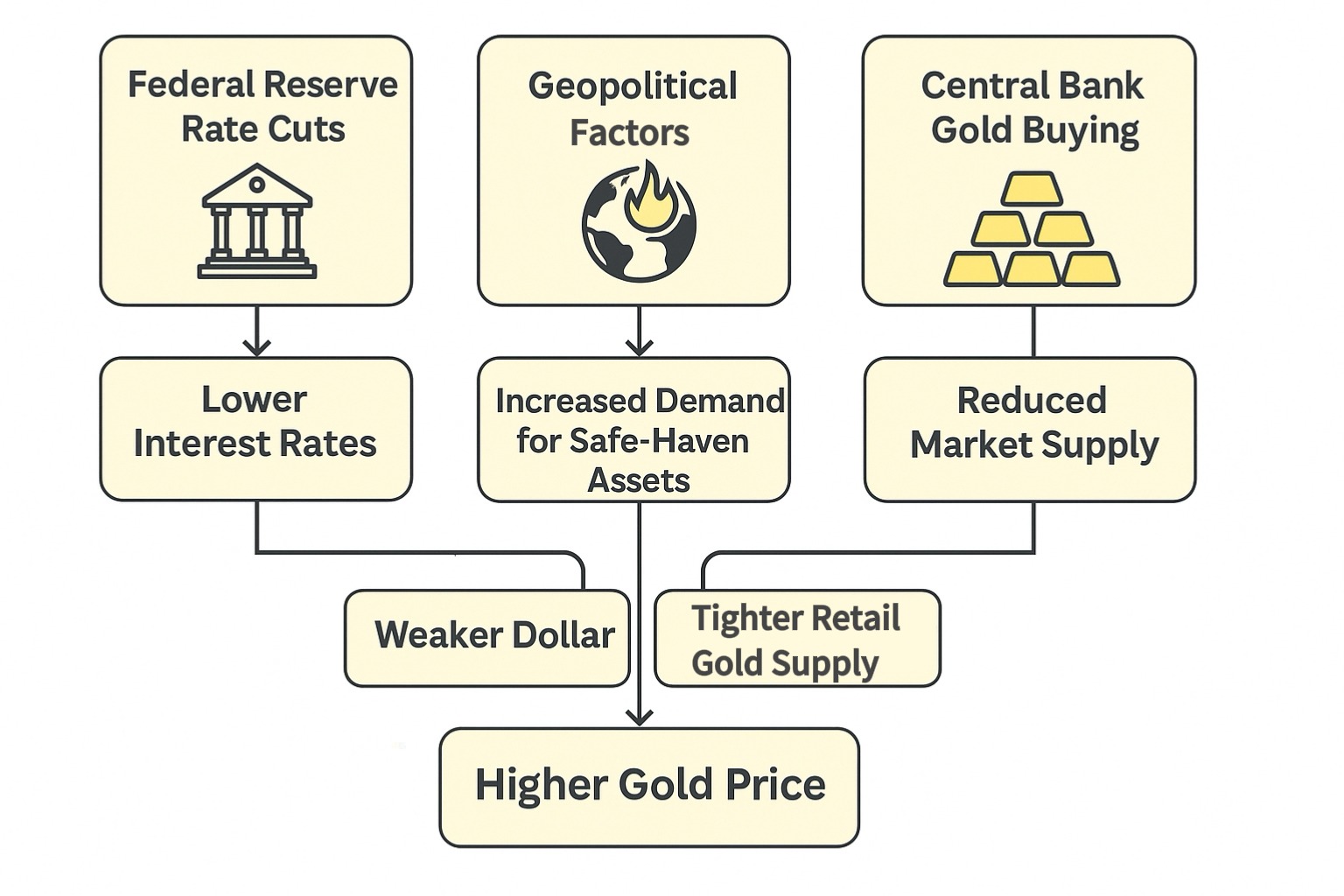
As of Oct. 31, the US Federal Reserve has cut the basic interest rates twice by 25 basis points on Sep. 18 and Oct. 29 to sustain economic momentum, as a weakened domestic labor market showed.
On Oct. 29, the Federal Reserve announced its plan to end quantitative tightening starting in December.
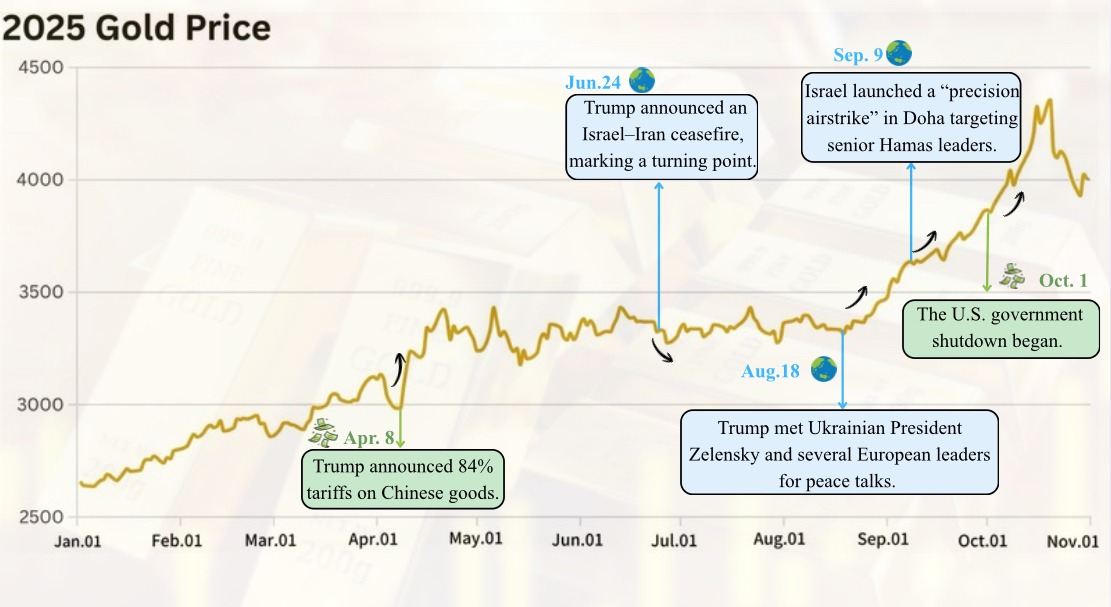
Alongside the evolving policy factors, escalating geopolitical tensions are also playing a significant role.
HSBC noted that on Oct. 8, gold prices first surpassed the $4,000 per ounce mark, driven primarily by various uncertainties, including the ongoing U.S. government shutdown, resurgence of tariff concerns, and increasing political ambiguity in France.
Market concerns over fiscal challenges are also on the rise, not only in the US but also in other economies such as France, the UK and Japan. All these factors may have jointly driven up the gold price.
Felix, an analyst from Fortune Prime Global, standing on the same side with HSBC, said that the policy debate of the Federal Reserve is still ongoing and unstable factors in regions such as Ukraine and the Middle East have repeatedly disturbed the market, and believes the buying base for gold will remain solid.
Beyond Fed policy and geopolitics, Rodolphe Bohn, a currencies and commodities strategist at HSBC Private Bank and Premier Wealth, identified central bank gold purchases as another key factor supporting gold's price floor.
In the third quarter of 2025, global central banks' buying remained 220 tons of gold, marking a 28% increase from the last quarter.
The World Gold Council also pointed out that central banks continue to view gold favourably, with the majority anticipating that the proportion of gold held as total reserves would be moderately higher in five years.
Central banks’ purchases of gold have also spurred a surge in institutional and retail investment demand. Union Bank of Switzerland (UBS) predicted that global gold demand is expected to reach approximately 4,850 metric tons this year, hitting a new high since 2011.
As gold prices hit historic highs, global gold ETFs recorded a 6% quarter-on-quarter increase in holdings in the third quarter of 2025, reaching 3,838 tons and marking the highest quarterly inflow since 2020.
And the trading volume of gold ETF products listed in Hong Kong has also continued to grow. The average daily trading volume of gold ETFs listed in Hong Kong rose by 183% year-on-year to HK$112 million in the first three quarters of 2025. At the same time, the asset management scale also increased by 45% to HK$15 billion.
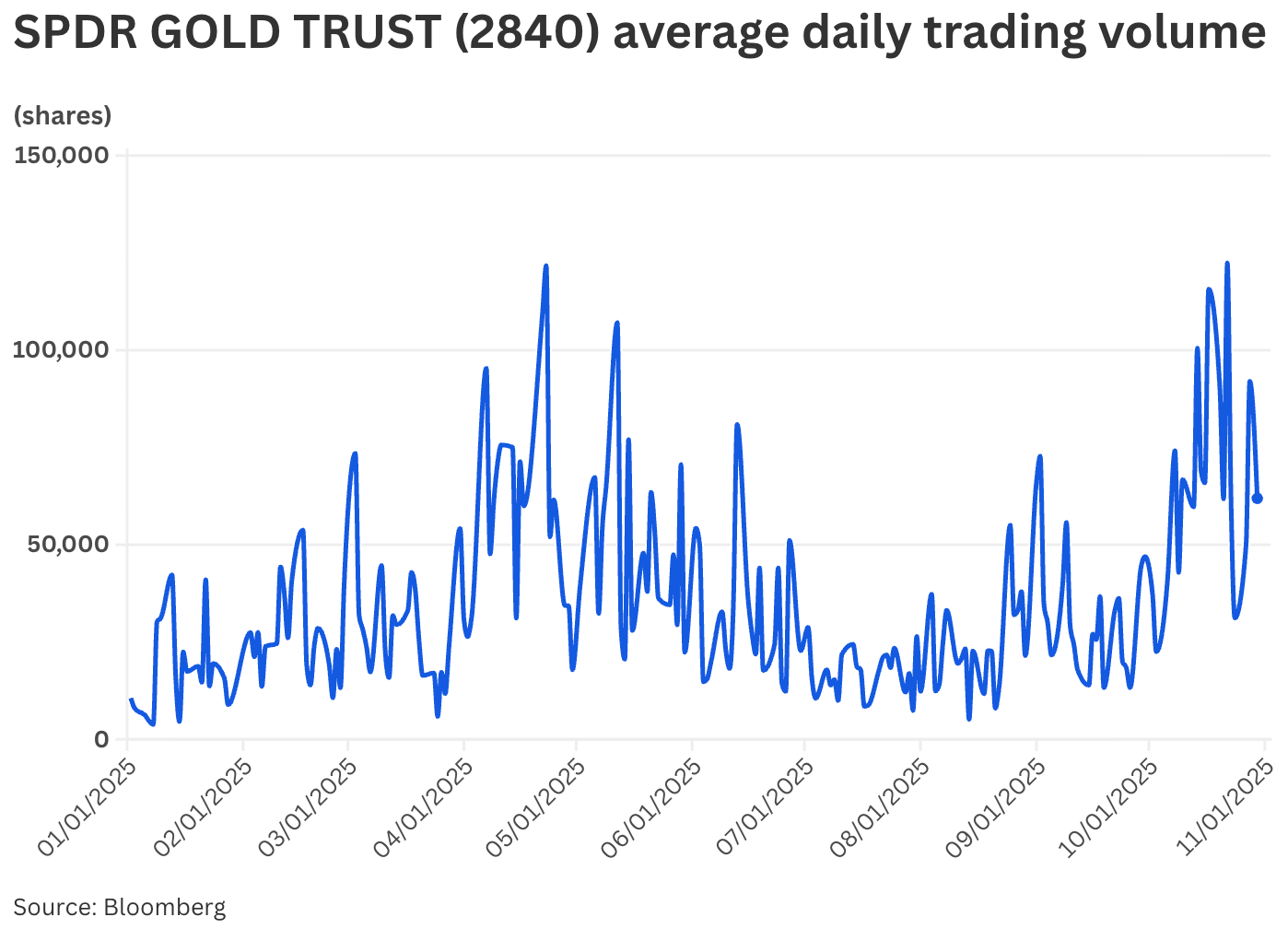
As of Nov. 24, the largest gold ETF in Hong Kong is SPDR Gold Shares (02840), with a scale of $136.38 billion.
As a product for tracking gold prices, SPRD Gold Shares’ stock gains benefit in tandem with the gold price. From HK$1,890.5 at the beginning of January to HK$2,876 at the end of October, its share price increased by more than 50%, making it the stock with the largest increase in the Hong Kong gold ETF market.
In 2025, three gold stocks, namely Chifeng Jilong Gold Mining Co., Ltd. (06693), Zhou Liu Fu Jewellery Co., Ltd. (06168) and Zijin Gold International Company Ltd. (02259), were listed in Hong Kong. As of Oct. 3, all three stocks had risen significantly compared to their listing prices, by 109.9%, 46.33% and 83.55% respectively.
AI Experiment in the Newsroom: How Generative AI help us to write the gold price story
To better understand their potential in reflective writing, we tested four generative AI platforms: ChatGPT, Doubao, DeepSeek, and Gork of this recap to help identify gold price fluctuation points, draft visual mappings, and search for official data.
In the process of analysing gold price fluctuations, generative AI tools offered both useful support and clear limitations. They helped quickly gather dispersed market information and generate preliminary explanations for price movements, which streamlined the research process and saved time when organising different market factors.
However, the quality and precision of AI-generated responses varied, and the analysis sometimes lacked a professional level of depth. Part of this resulted from the inconsistency of gold-price data across different sources, as updates were not always timely and AI tended to select historical prices randomly from multiple websites.
Our own imprecise prompts also affected output accuracy. For instance, when we requested key turning points in gold prices between Jan. 1 and Oct. 31, the timeframe was too broad, leading AI systems to produce overly general results or include too many irrelevant fluctuations, which required further manual refinement.
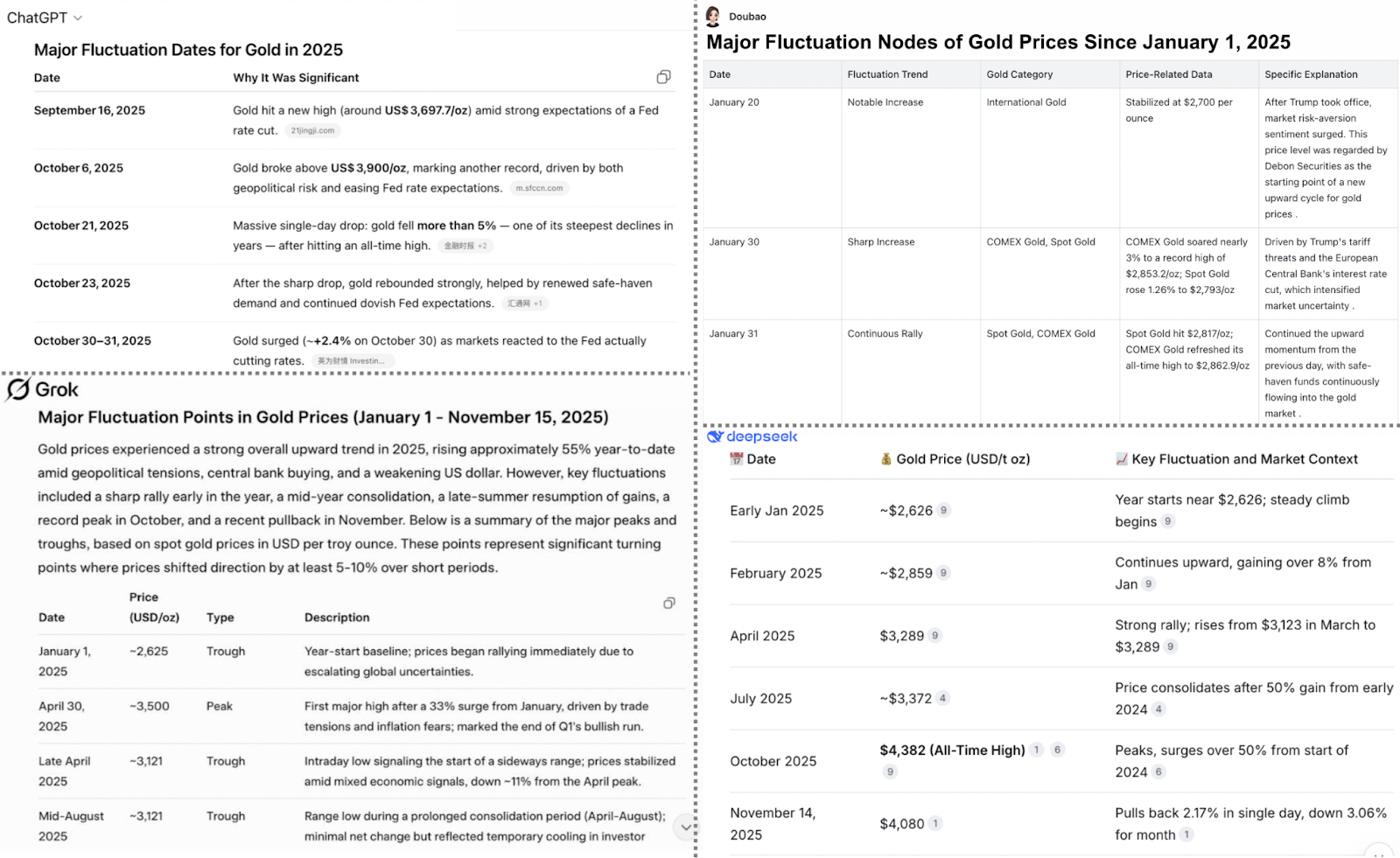
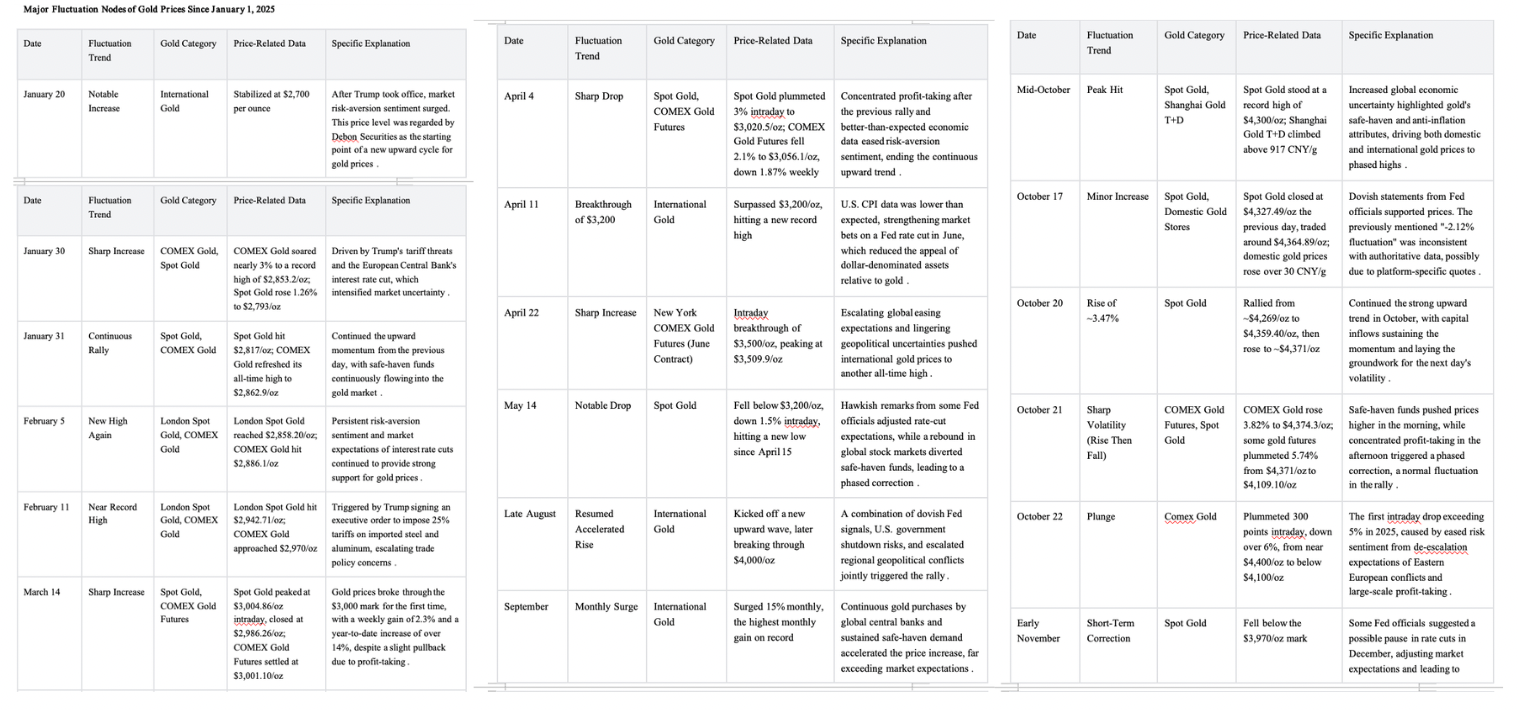
After manually verifying several data points, we found many numerical errors in ChatGPT's response and excluded it from consideration. Then, we sorted out the responses of the remaining three AI models. Deepseek and Gork gave similar responses, but lacked details. However, Doubao gave us a relatively detailed and accurate list of fluctuations in gold prices, so we asked it to generate a complete table.
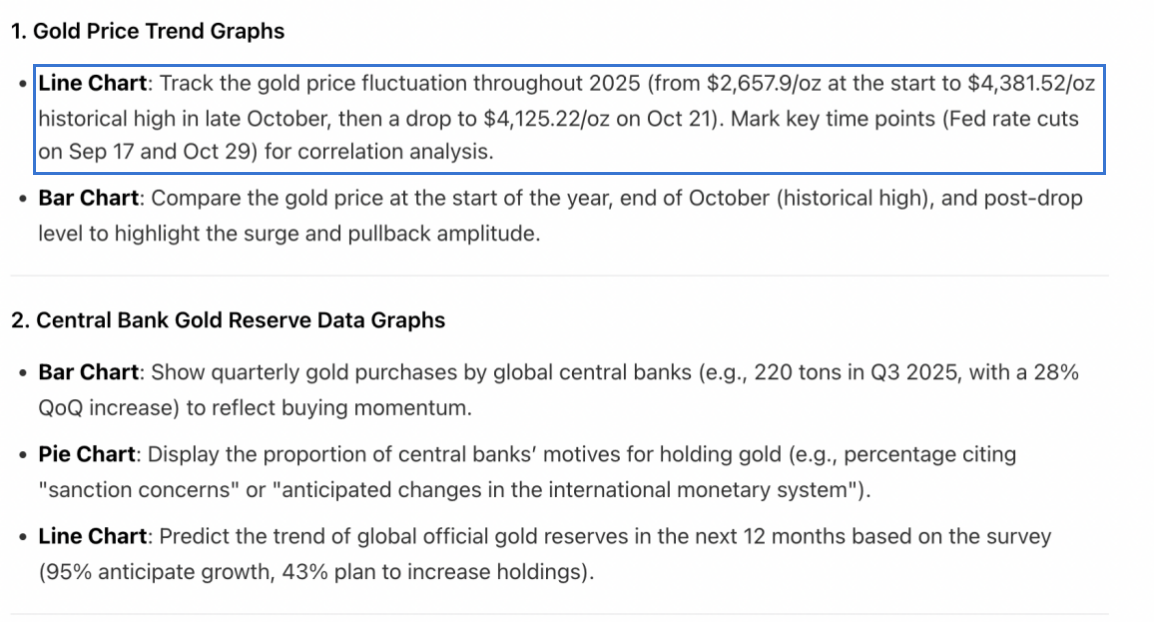
In addition, considering that there are many factors influencing the fluctuation of gold prices, we have asked generative AI to collect real official data that may reflect the situation of gold prices and to provide chart suggestions to increase the richness of content visualisation.
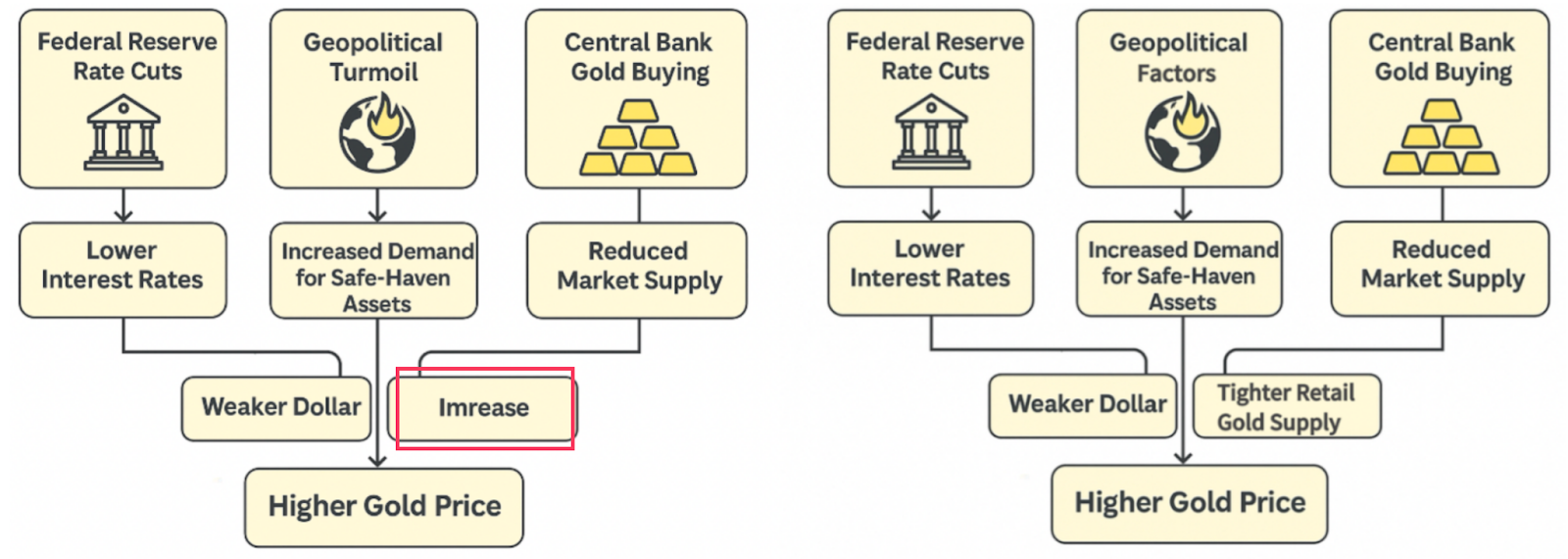
We also used generative AI to create flowcharts that affect the price of gold, but there were repeated sequence errors and word usage mistakes in the pictures, which eventually led us to make manual corrections.
Through this experience, we found that generative AI is highly reliable for simple background analysis. However, when it comes to specific details about gold price fluctuations, human monitoring and prompt refinement are essential to ensure accuracy.
《The Young Reporter》
The Young Reporter (TYR) started as a newspaper in 1969. Today, it is published across multiple media platforms and updated constantly to bring the latest news and analyses to its readers.

GBA forum: Hong Kong firms urged to tap mainland demand amid sluggish retail recovery
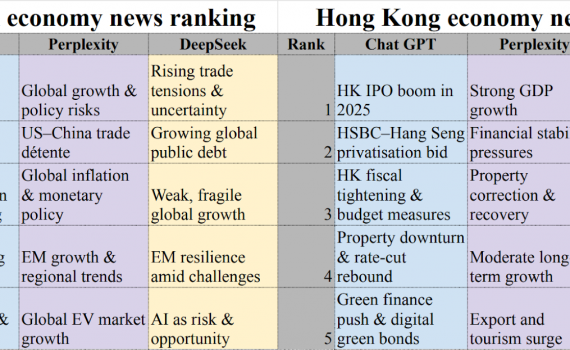
2025 in finance: The biggest stories through AI and expert eyes



Comments