
In a cramped public housing flat in Wong Tai Sin, Li Yuet-siu, 74, spends almost every hour of her day caring for her 89-year-old husband, who has been bedridden since he broke bones in both hips and legs in 2018.
He can still stand and walk a few steps with a cane, but only as far as the toilet, clinging to furniture and walls for support.
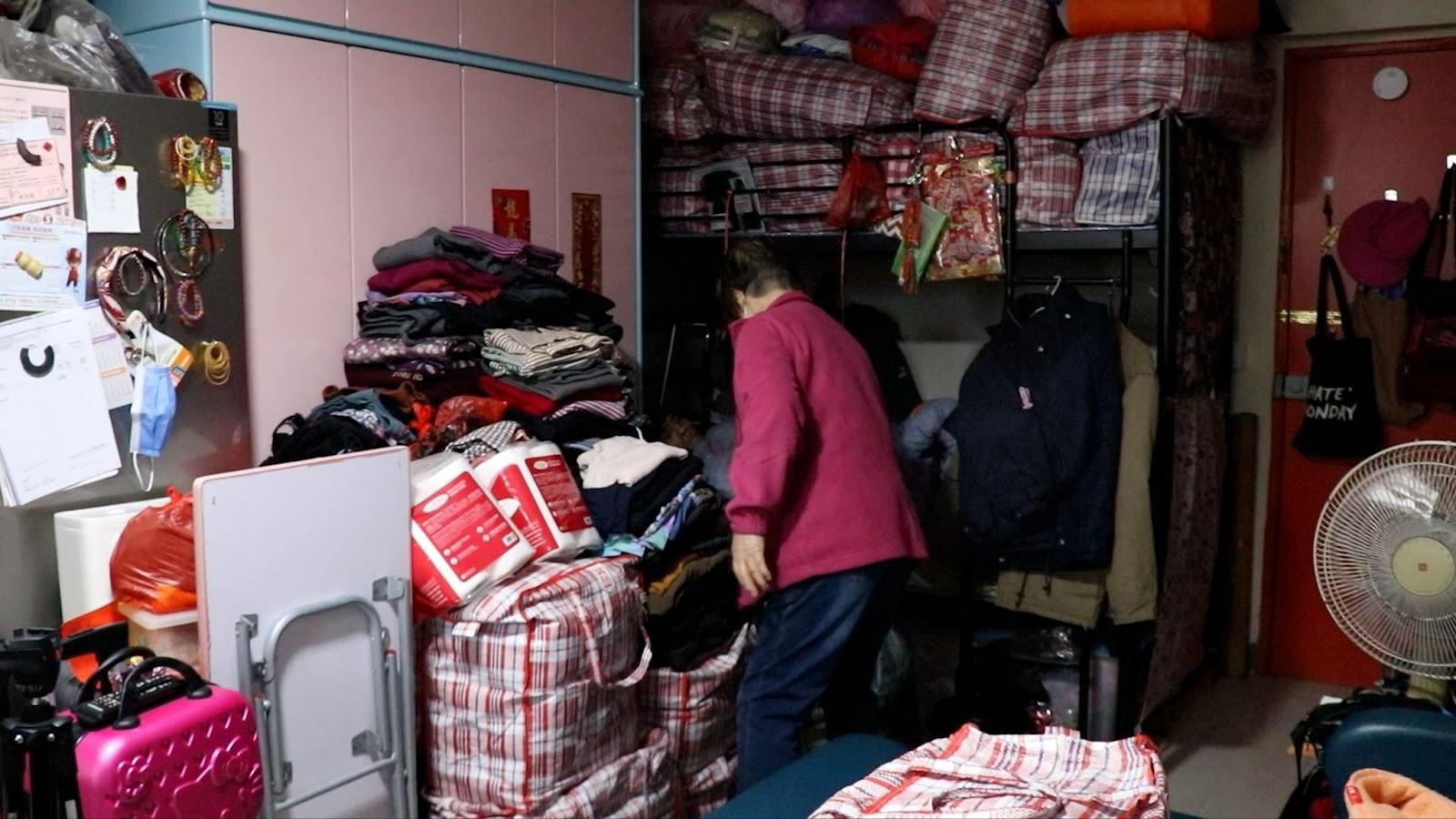
After the accident, Li said her husband was hospitalised and moved into two different government-funded care homes. But he repeatedly shouted and begged to go home, making it impossible for carers to help him.
Since he has moved home, every need – from getting out of bed to going to the bathroom – has rested on Li’s shoulders.
“Every day, I help him eat, wash and use the toilet. He refuses to wear adult diapers, saying they’re too hot and uncomfortable, so I have to wake up at midnight when he needs to urinate,” Li said, adding that her husband sometimes gets up by himself but falls.
“Lifting him hurts my back badly, but if I drop him, it’s worse... Once when he fell, I couldn’t lift him, so I called the ambulance service. The staff said moving him could dislocate bones or injure him further, but I had no choice. I had no training and no one to help,” she said.
Hong Kong’s rapidly aging population is straining family caregivers, many of whom are elderly themselves and face chronic exhaustion, injuries and emotional turmoil without adequate support. An expert estimates there are around 180,000 elderly caregivers in Hong Kong.
According to the Census and Statistics Department, the number of elderly persons aged 65 and over is projected to nearly double over a 25-year period, from 1.45 million in 2021 to 2.74 million in 2046.
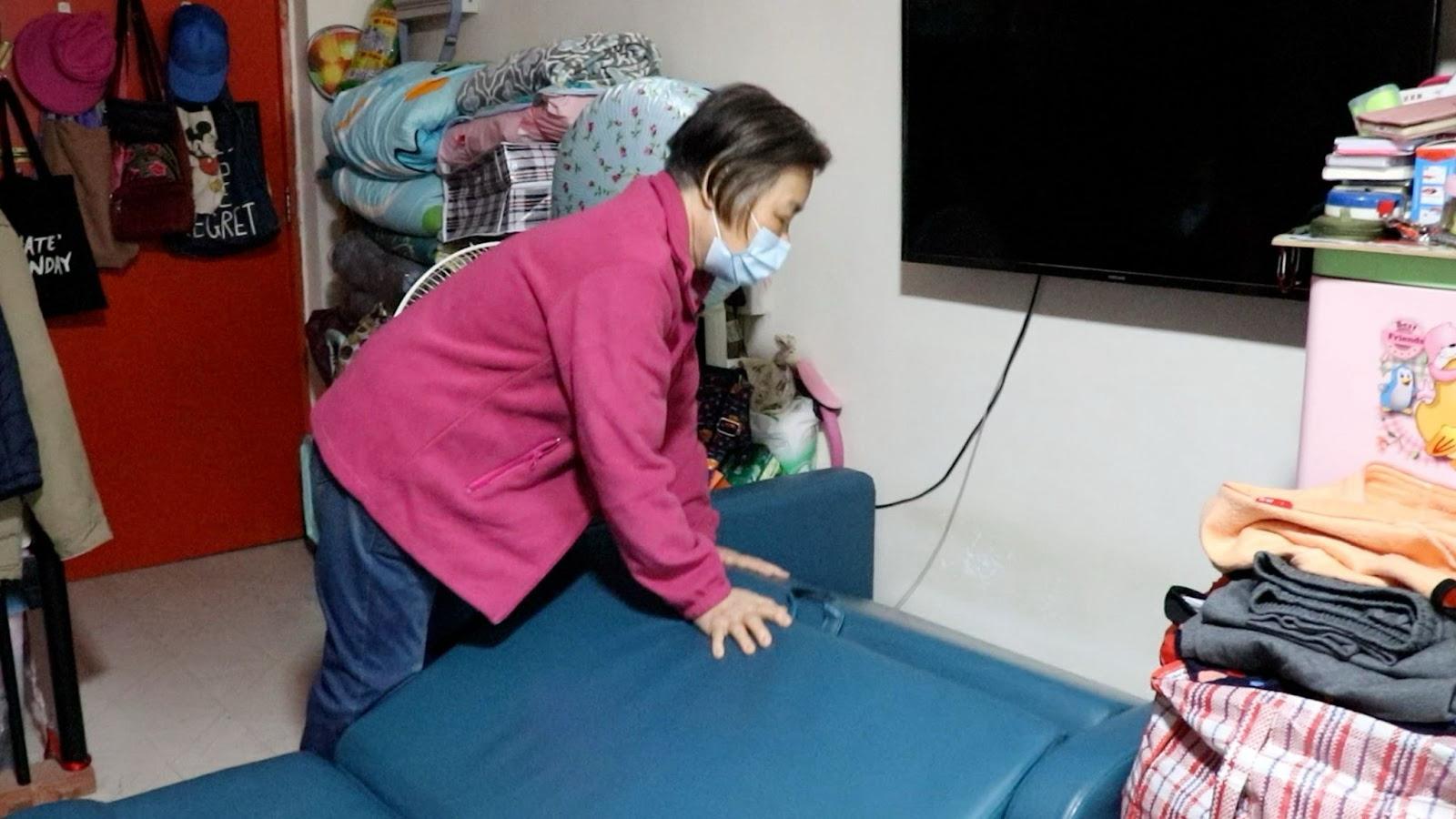
Li sleeps on a pull-out sofa bed next to her husband. When he tries to move, he always bumps into Li, which leads to her not sleeping well.
“I’m constantly on alert in case he falls again. Still, I tell myself I must endure since there’s no one else to rely on,” Li said.
The physical strain and broken sleep have taken a toll on Li, who now relies on painkillers for her back and sleeping pills prescribed by doctors to get any rest at all.
She added that doctors said she needs minor surgery soon.
“I’m worried, because I still have to arrange for someone to watch him while I’m gone. My biggest fear is leaving him alone, even for a day,” she said.
At the end of 2023, the government established what is called the District Services and Community Care Teams in every district that organise caring activities for those in need, such as regular home visits.
Wong Tai Sin’s Chuk Yuen South, where Li lives, has a care team of 12 members, visiting 650 elderly households in the subdistrict regularly.
Li said two care team members visited her house once, asked briefly about her husband and then quickly left.
“I felt hurt. They didn’t even offer reassurance. A social worker later called, telling me to go out and relax for half a day, but I can’t. My husband’s condition affects my emotions deeply,” she said.
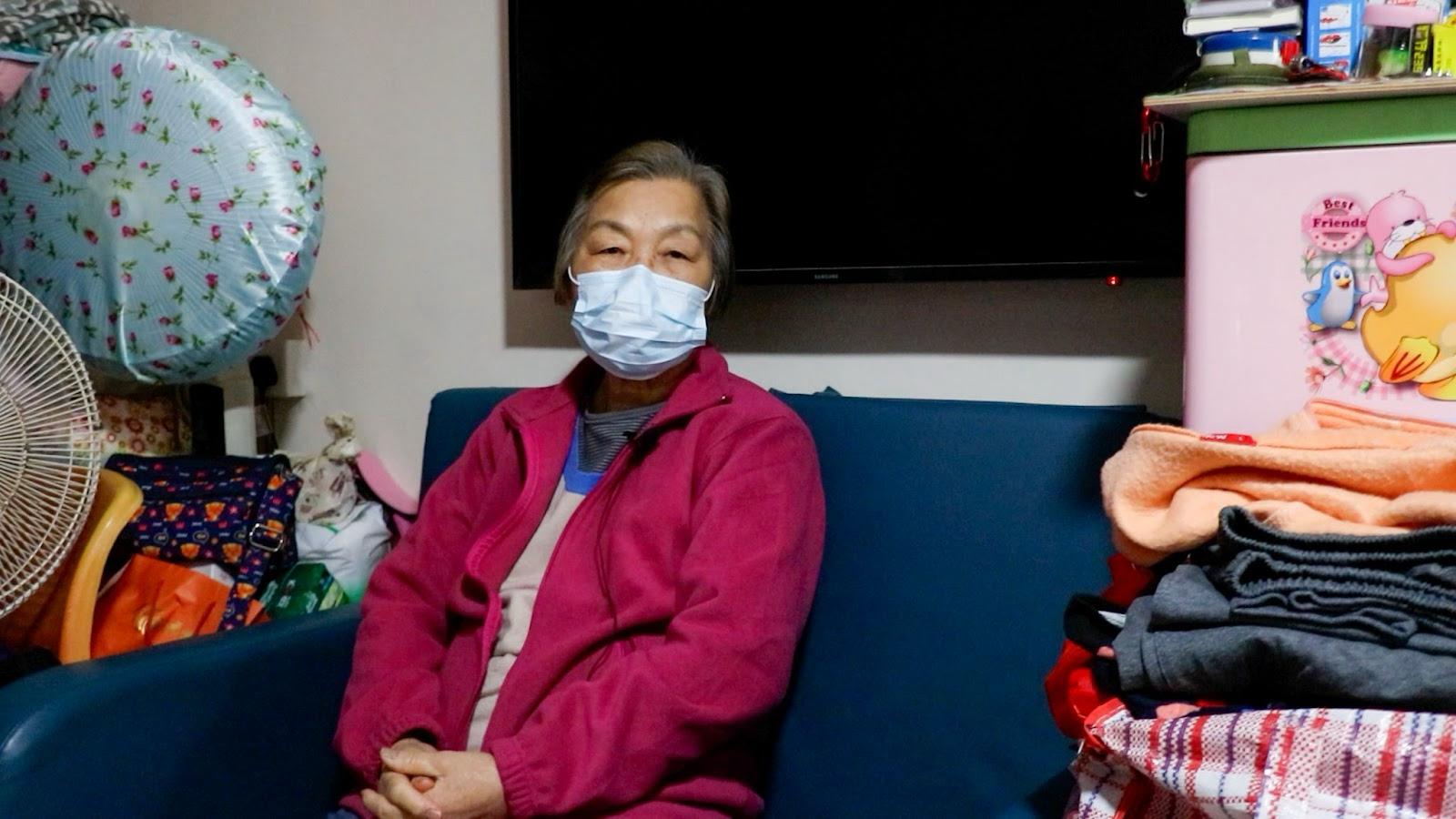
In the 2025 Policy Address, the government said it planned to earmark an annual recurrent expenditure of HK$500 million to roll out a series of measures to enhance support for carers.
The policy includes launching a Carer Support Data Platform, which connects the data of the Social Welfare Department, the Hospital Authority and the Housing Authority, and progressively more data from government departments and public organisations to expand the platform.
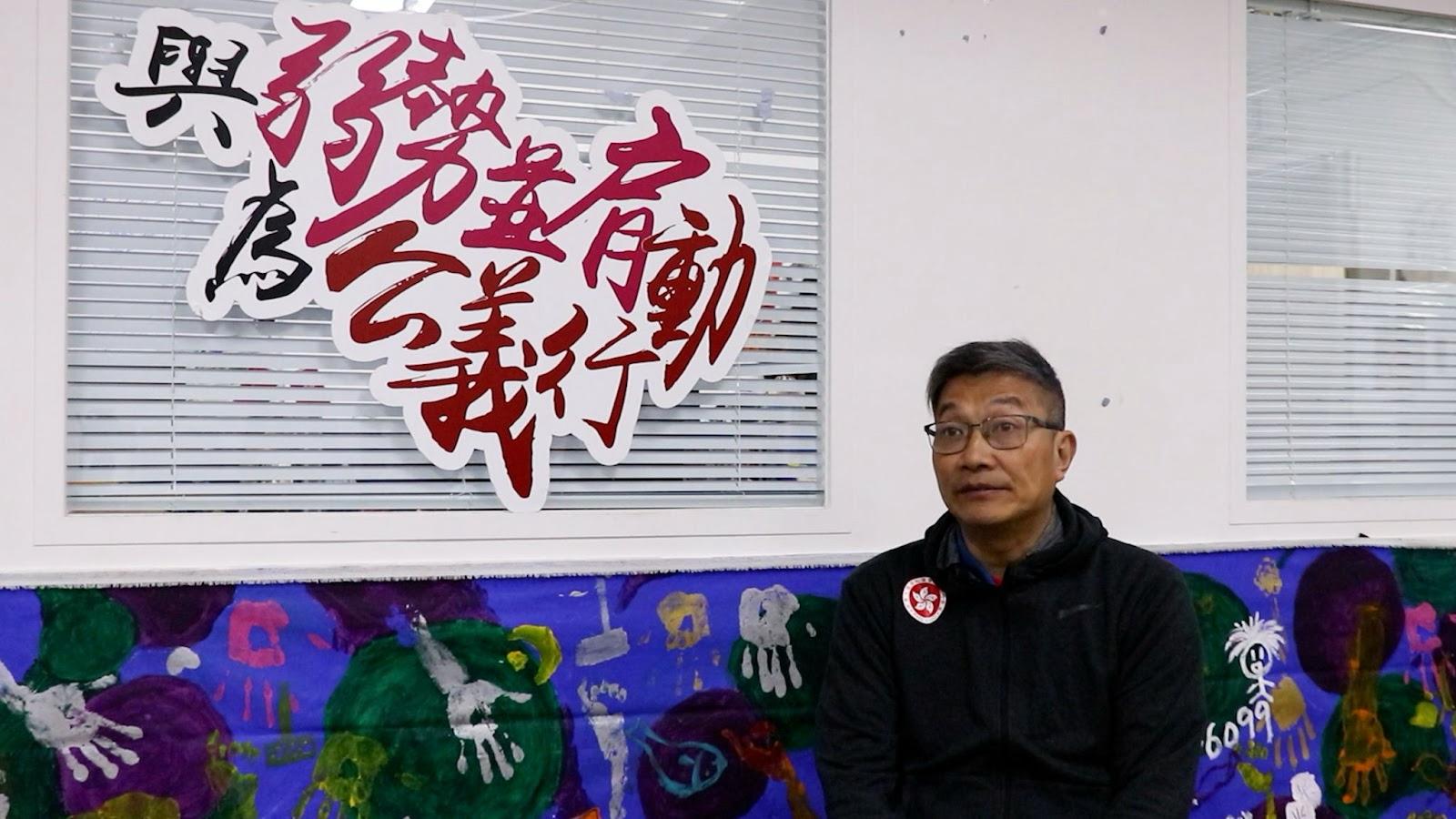
“To be fair, the government has made some improvements recently,” said Ng Wai-tung, a community organiser from the Society for Community Organization.
“There are more temporary respite care services, and the care teams are paying more attention to caregivers’ needs, but we still hope the government can strengthen policy and services.”
Still, there is no formal caregivers policy to support them, Ng said, adding that there are 500,000 caregivers in Hong Kong, of whom 180,000 are elderly caregivers.
In Sept. 2023, the Social Welfare Department launched a “182 183” hotline for carer support. It also launched a temporary residential respite service for the needy.
The community organiser also said the hotline, temporary respite beds and care teams are somewhat useful.
In 2023, the Social Welfare Department introduced a Scheme on Living Allowance for Carers of Elderly Persons from Low-income Families, providing a HK$3,000 monthly subsidy for eligible carers.
Only carers who are not receiving dole money are eligible. Ng said carers who quit their jobs to care for an elderly family member may not qualify.
May Fung, 67, has been burdened with taking care of her 92-year-old mother while working full-time as a security guard for over a decade.
“Her cognitive decline has been severe for the past two months, knocking on others' doors and filling bowls of water for no reason,” Fung said. Fung said it reached the point where she was no longer capable of taking care of her mother.
On Dec. 23, 2025, Fung asked Ng and SoCo for help to apply for government-subsidised residential care services but was told that the review for her mother’s case would take at least a month to finish.
Fung decided to look for short-term residential care services for immediate help, a government subsidised programme that allows eligible people to stay for up to 42 days a year.
Two days later, they were able to find a bed in a private care home in the Kwun Tong district, charging HK$62 a day. But the spot only allows Fung’s mother to stay for 31 days.
Fung moved her mother into the home in January.
“I was very worried and I wanted to settle everything down. I am 67 years old, on the verge of retirement, working 12 hours and visiting her every day is very tiresome,” Fung said.
Community organiser Ng said he anticipates the government to establish a database for high-risk old-aged carers, allowing social workers or care teams to prioritise resources to allocate and identify households that need urgent help like Fung.

Ng said that finding a spot in care homes is difficult, as the online information is not up to date.
“You can look for available spots online but the information is one to two weeks behind, meaning that we had to call each care home to confirm. Besides, the care homes will determine whether to accept the users based on their conditions,” Ng said.
In January, Fung began searching for another residential care home, as her mother’s subsidised stay was coming to an end.
But Fung changed her mind once the 31 days were up. Her mother still lives in the same care home, unsubsidised, paying around HK$15,000 a month, while applying for a subsidy under the Social Welfare Department, which allows her to pay HK$2,060 monthly.
There are other options which allow her mom to live in a subsidised care home a year earlier, but it requires her to move.
“I don’t want her to move around and adapt to a new environment again. Once she starts living here, I hope she will be staying here,” Fung said.
She said she has no idea how long the application will take.
“I don't want my mother to wait so long, since she’s 92. I hope we can be subsidised as soon as possible, so that I don’t have to pay HK$15,000 a month.”
《The Young Reporter》
The Young Reporter (TYR) started as a newspaper in 1969. Today, it is published across multiple media platforms and updated constantly to bring the latest news and analyses to its readers.

Long queues for special child care centres: what does over a year’s wait mean for families?

Hong Kong queer Christians: The struggle between faith and sexual identity among Hong Kong queer Christians


Comments