
At 2:51 pm on Nov. 26, a fire broke out in the lower level of one of the eight blocks in Wang Fuk Court, a residential complex in the Tai Po neighborhood of Hong Kong’s New Territories — home to more than 4,600 residents.
By 7:30 pm, seven of the eight buildings were on fire, giant flames turning the sky red and billowing clouds of black smoke thickening the air. Firefighters battled the fire for nearly two days, finally putting it out on Friday morning.
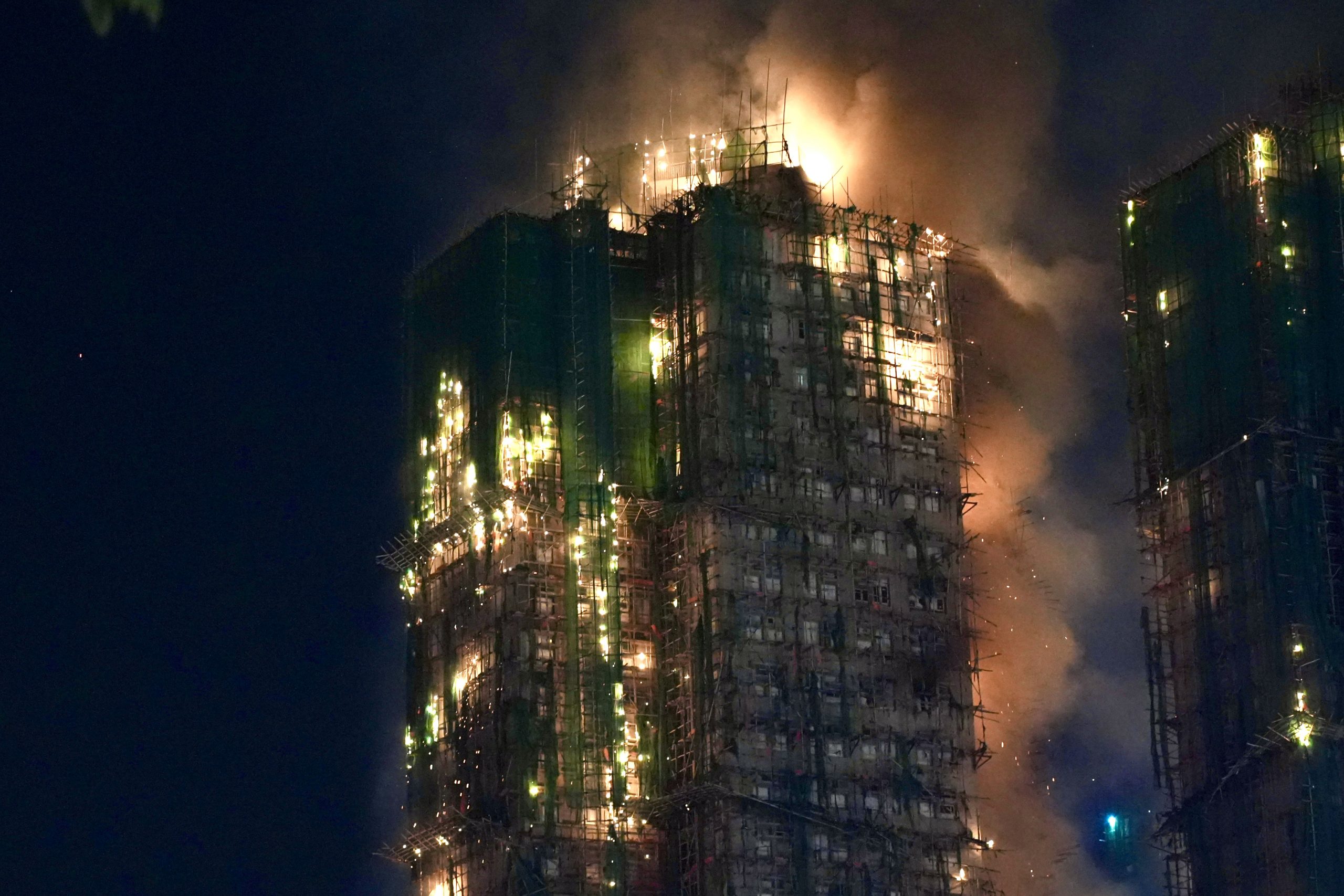
As of Dec. 1, at least 151 people are dead, and 79 are injured. This is the deadliest fire in Hong Kong since 1962.
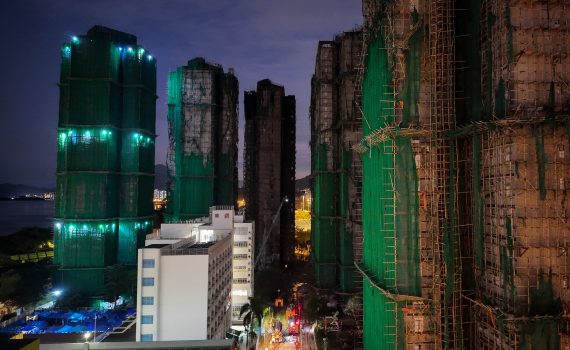
The estate had been undergoing extensive renovations since the summer of 2024, and all of the 31-storey buildings were covered in traditional bamboo scaffolding wrapped in the ubiquitous green or grey mesh seen on construction sites all over the city.
As the buildings burned, in videos that spread across social media, the sound of bamboo cracking could be clearly heard. But when the flames were finally put out, much of the blackened bamboo scaffolding was still standing.
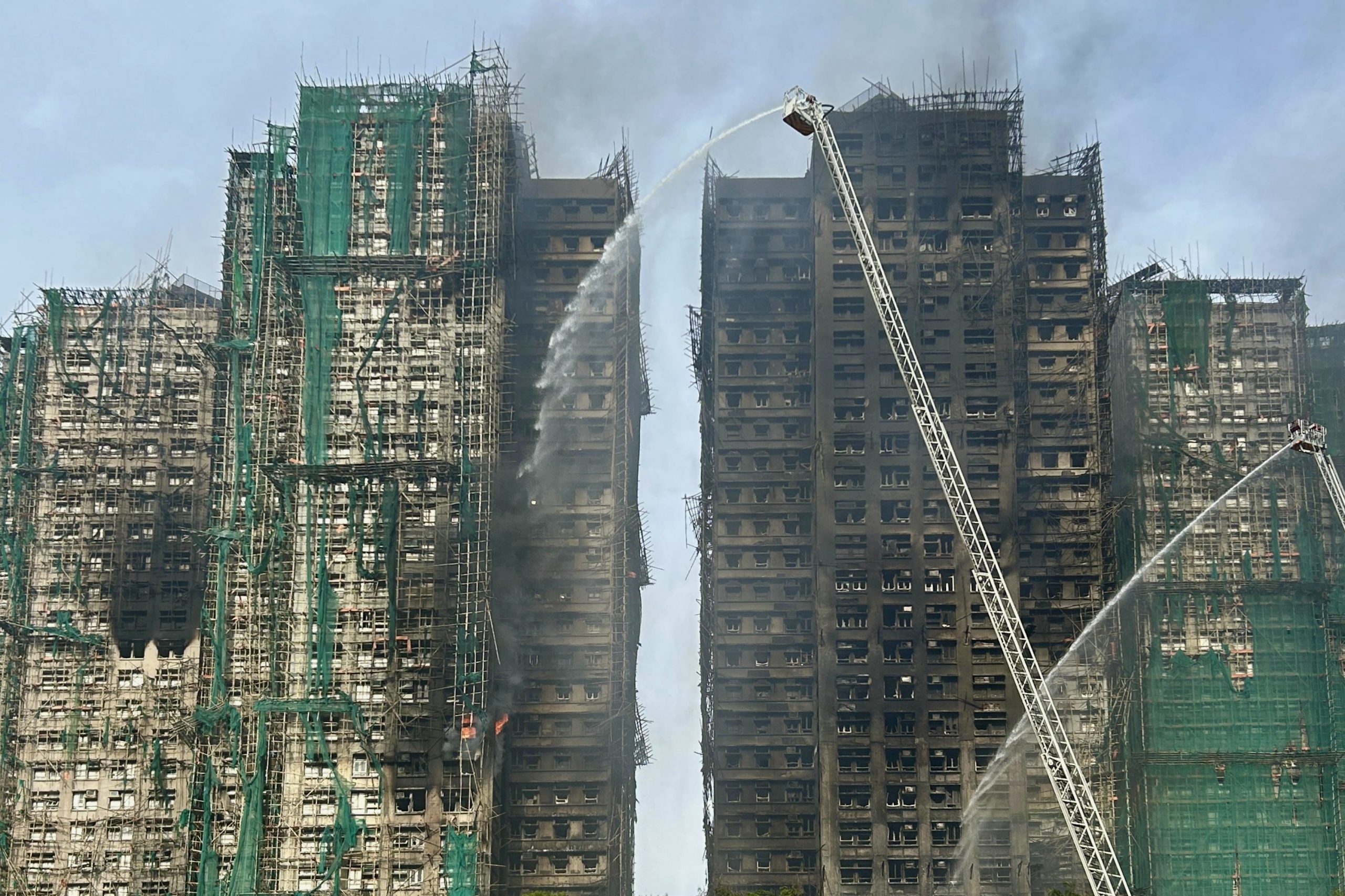
The use of bamboo scaffolding in construction, from small-scale work to skyscrapers, has been a visible part of Hong Kong’s cityscape for nearly two centuries. But the Wang Fuk Court fire, on the heels of smaller fires at building construction sites in recent months, has stirred controversy over whether the bamboo had anything to do with the fire and if it should be replaced with steel for safety reasons.
Kristof Crolla, associate head at the University of Hong Kong’s department of architecture, said bamboo is unique.
“It's kind of nature's optimal engineered material to use as a construction system in a way that none of our modern materials behave,” he said.
Following an on-site investigation and evidence collection by the police, Secretary for Security Chris Tang Ping-keung said on Dec. 1 that seven samples of scaffolding mesh found at the scene failed to meet flame-retardant testing standards.
He said the non-compliant mesh, combined with the foam insulation used to protect windows, contributed to the rapid spread of the fire.
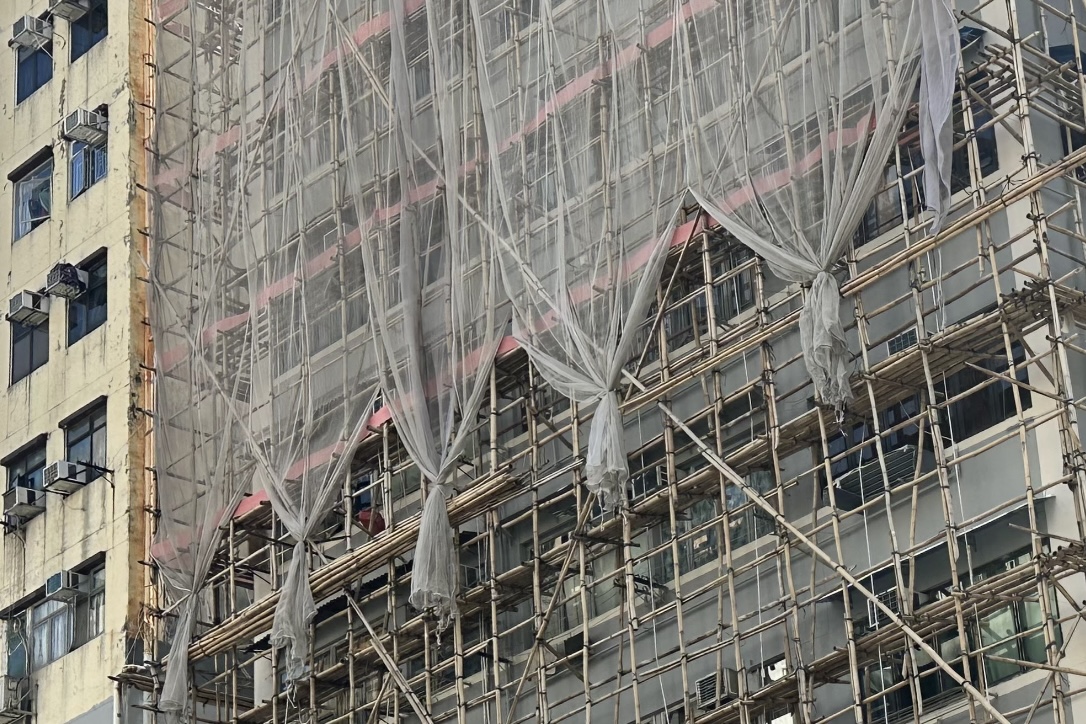
Though bamboo is not mentioned in the government investigative report, the Development Bureau met with the industry last week to discuss the replacement of bamboo with metal for scaffolding, according to a government press release.
But experts say bamboo scaffolding is cheap, safe, fire-resistant and a cultural heritage Hong Kong should preserve.
Mainland China switched from bamboo to steel for scaffolding materials in the 1960s. It has the world's largest steel industry and is one of the main exporters of scaffolding, shipping 72 million tons in October 2025, according to the World Steel Association.
Used to steel, some mainland Chinese netizens have commented on posts about Hong Kong’s use of bamboo as backward. On Xiaohongshu, an image claiming bamboo is more heat-resistant than metal spread widely, with many scoffing at the claim.
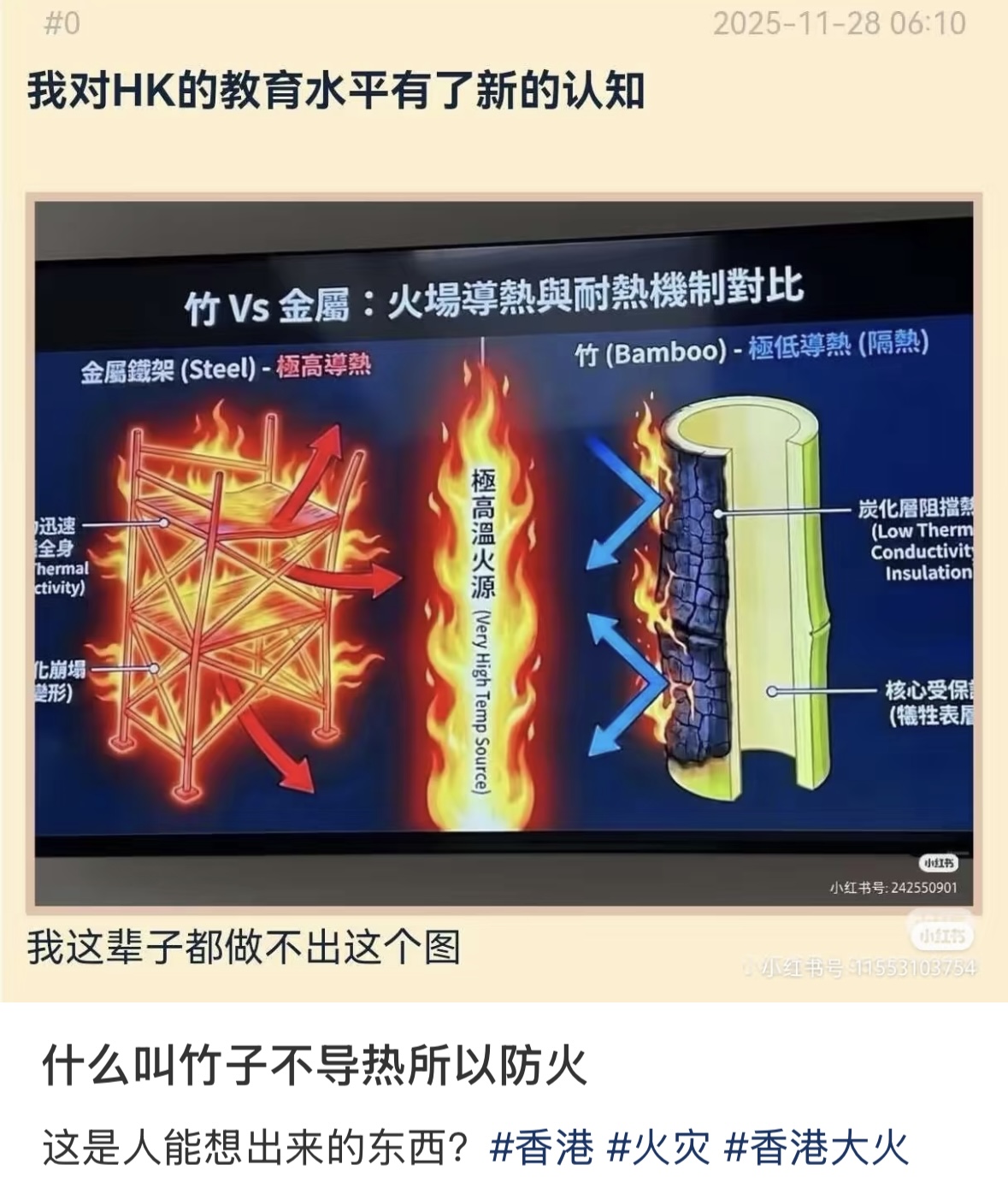
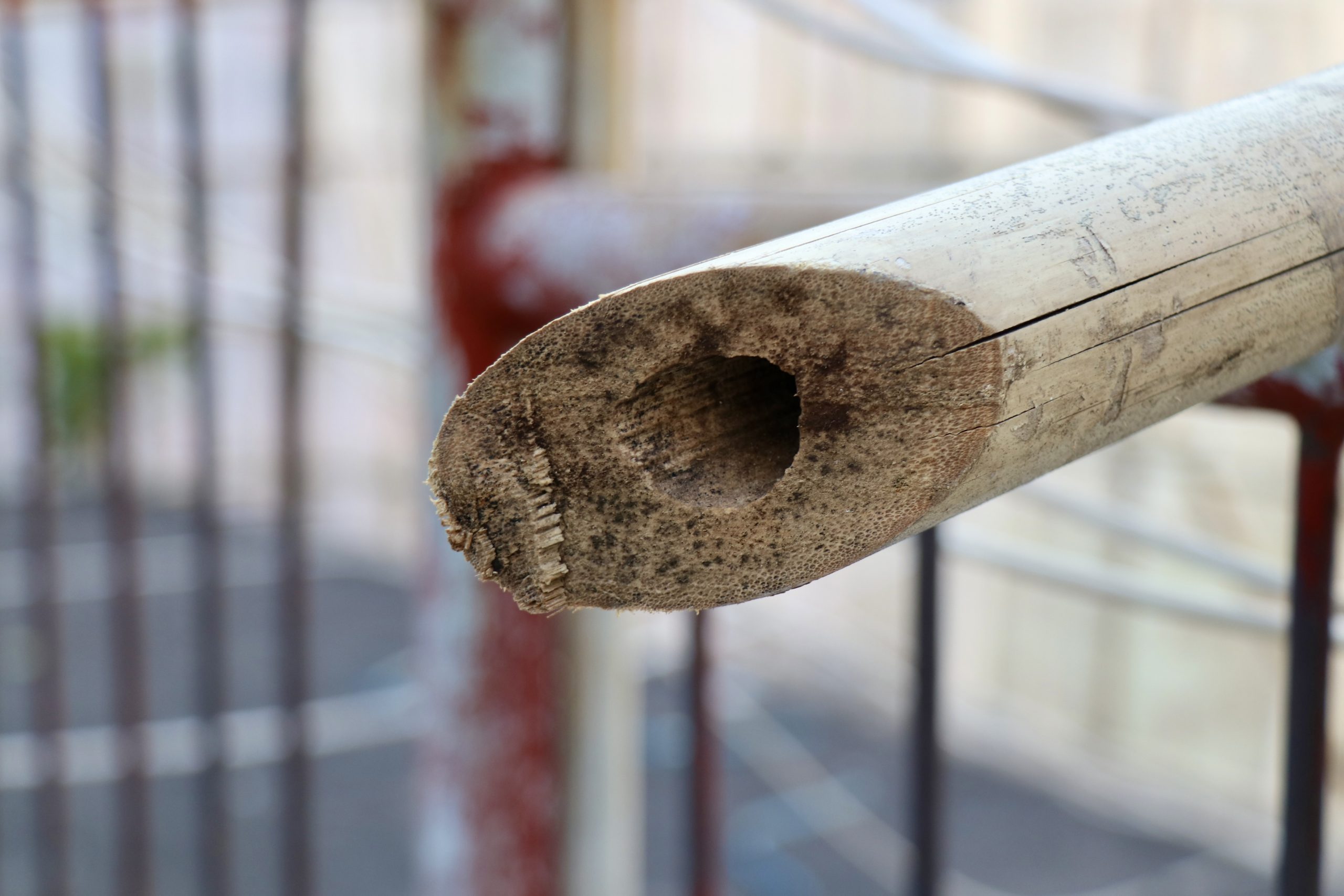
Andy Ong, 26, co-founder and director of Super Bamboo, a technology company that uses fire-roasted bamboo to develop new materials, said that their fire-test findings on bamboo over the years show that it is heat-resistant.
He showed the reporter that when a biomass material like bamboo burns, it forms a stable char layer that acts as a heat shield, protecting the interior.
“Since bamboo is relatively dense and has a thicker wall than many other biomass materials, it also has a slower charring rate,” he said.
“Steel holds heat and collapses suddenly, but bamboo burns predictably and slowly, giving escape time,” he added.
According to data research done by the reporter, there have been at least ten construction site fires this year. The largest was October’s No.3 fire at the Chinachem Tower in Central with four hurt.
In March this year, the Development Bureau issued a directive requiring that no less than 50% of all new government public works building contracts must switch to metal scaffoldings, mimicking mainland China.
The government said that although bamboo scaffolding is more flexible in use, it is not as effective as steel for fireproofing.
Kwok Chi-tak, 72, spokesman of the Hong Kong Institution of Engineers, said the Buildings Department and Labour Department in Hong Kong have clear guidelines and codes on the materials, structure and construction safety of bamboo scaffolding.
“As long as industry practitioners follow the guidelines, the safety of materials and structure can basically be guaranteed,” Kwok said.
According to the Census and Statistics Department, this city currently has around 1,600 building sites under construction.
There are 2,810 people with bamboo scaffolding certificates who meet the registration requirements under the Construction Workers Registration Ordinance in government registration data.
Crolla said bamboo scaffolding has been used since the 1800s, when the small port city needed cheap and quick ways to build.
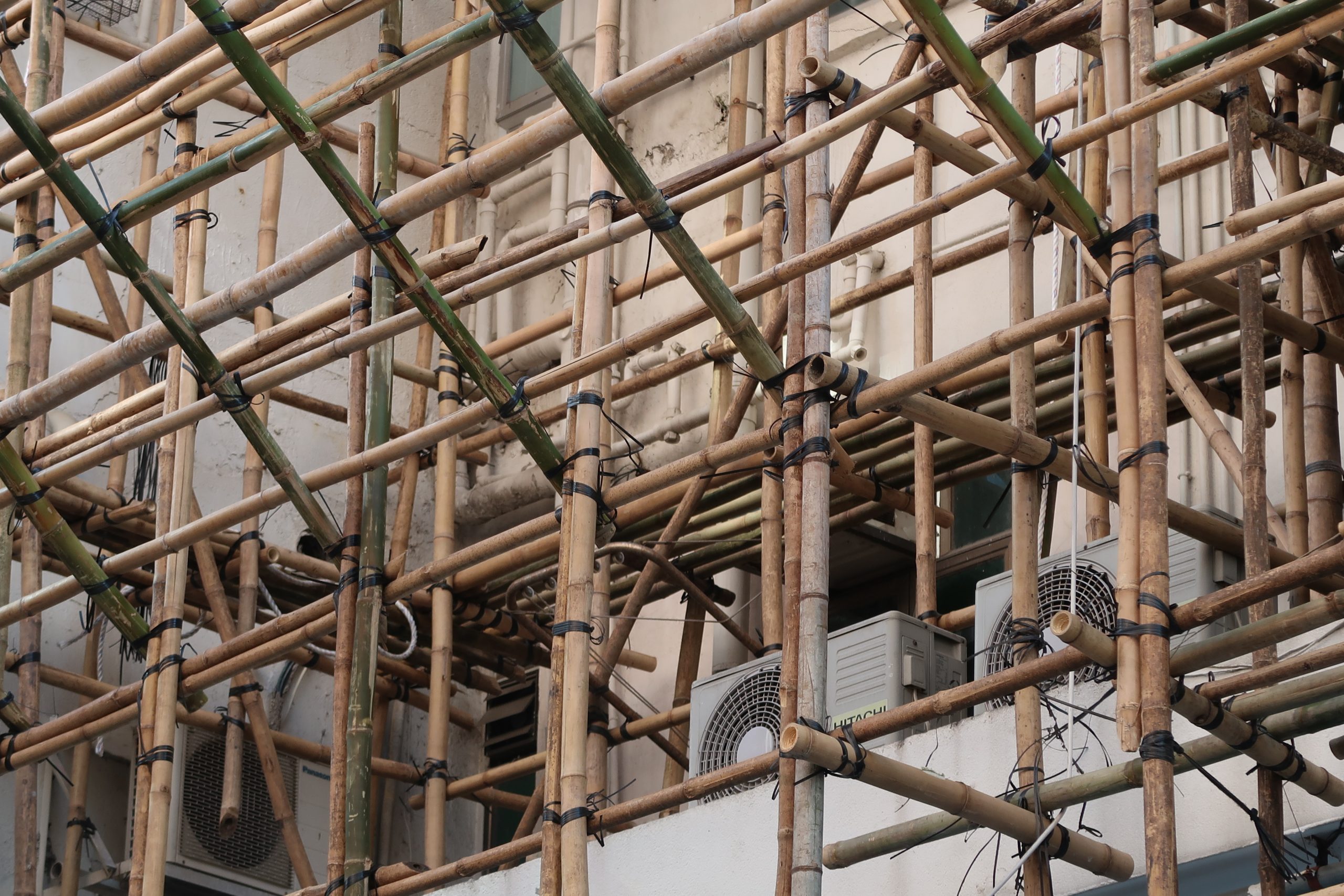
After World War II, Hong Kong grew rapidly, with factories and buildings springing up. Kwok said bamboo became the best choice for its safety, construction speed, and low cost.
Hong Kong's terrain is varied and complex, with some residential buildings built on mountain slopes and some built beside the coast.
“Bamboo is nimble and adapts to Hong Kong's varied sites, like hills or water, better than steel, which is heavier and less flexible,” Crolla said.
In Hong Kong, the bamboo used for scaffolding primarily comes from Zhaoqing in Guangdong, Guangxi, and Vietnam.
According to the Bamboo Trellis Design and Construction Guide published by the Buildings Department, all bamboo used for scaffolding must be at least three years old and undergo at least three months of air-drying.
Last year, seven typhoons hit Hong Kong, with heavy rain and strong winds.
“In typhoons, bamboo scaffolding may collapse but remains hanging on the building and can be pulled back up, whereas steel would crash harder,” Crolla added.
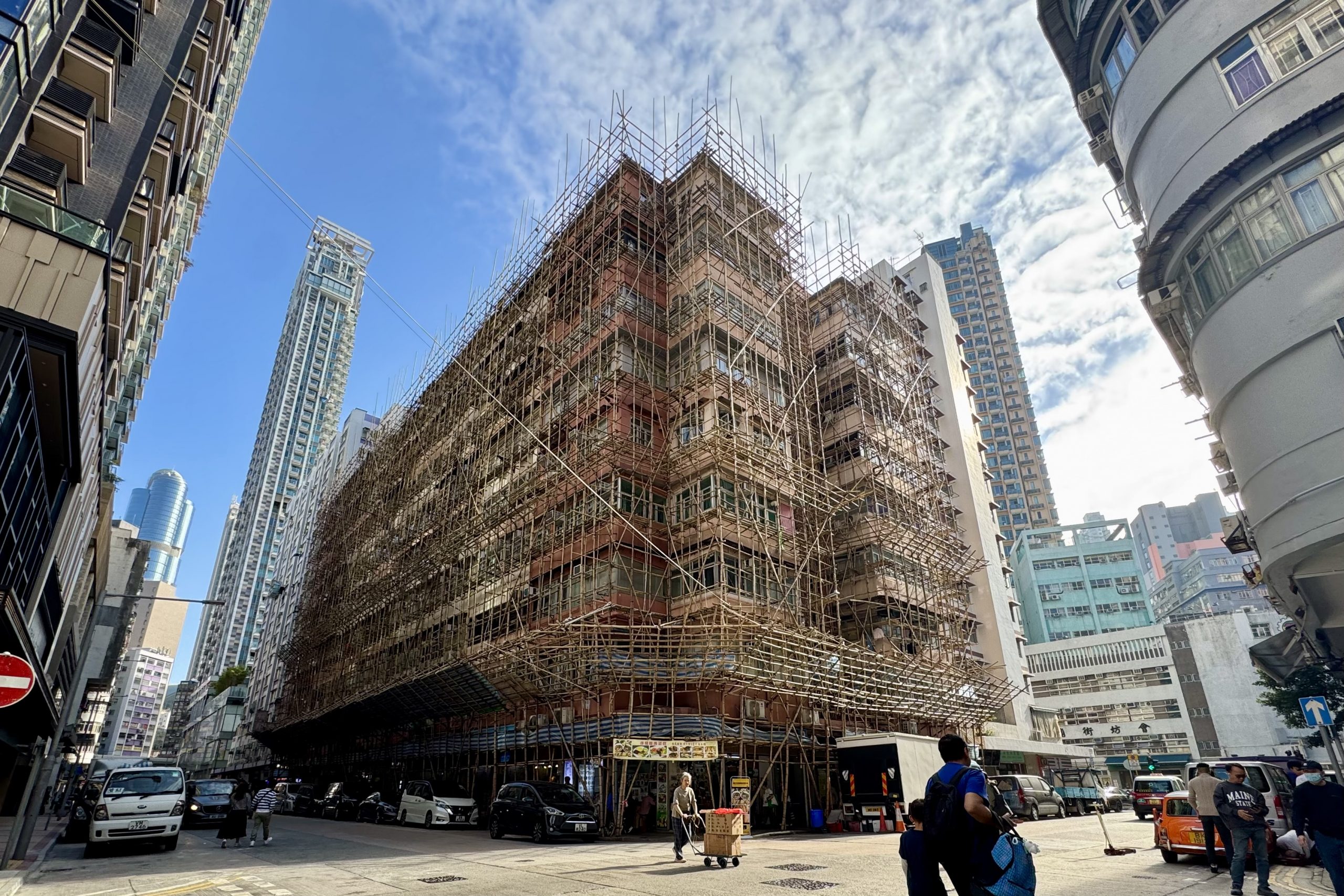
It’s Hong Kong’s older buildings that often need scaffolding for repair work. Statistics from the Development Bureau in 2023 show that the number of old buildings in Hong Kong aged 50 years or above has increased from 4,500 to 9,600 in the past decade. It is projected to reach 22,900 by 2042.
For external building maintenance, the industry most commonly uses suspended bamboo scaffolding. This structure can cover only a specific section of a building without reaching the ground.
Although metal scaffolds have been introduced and used alongside bamboo, workers still rely on bamboo to build flying platforms for repairing windows or pipes.
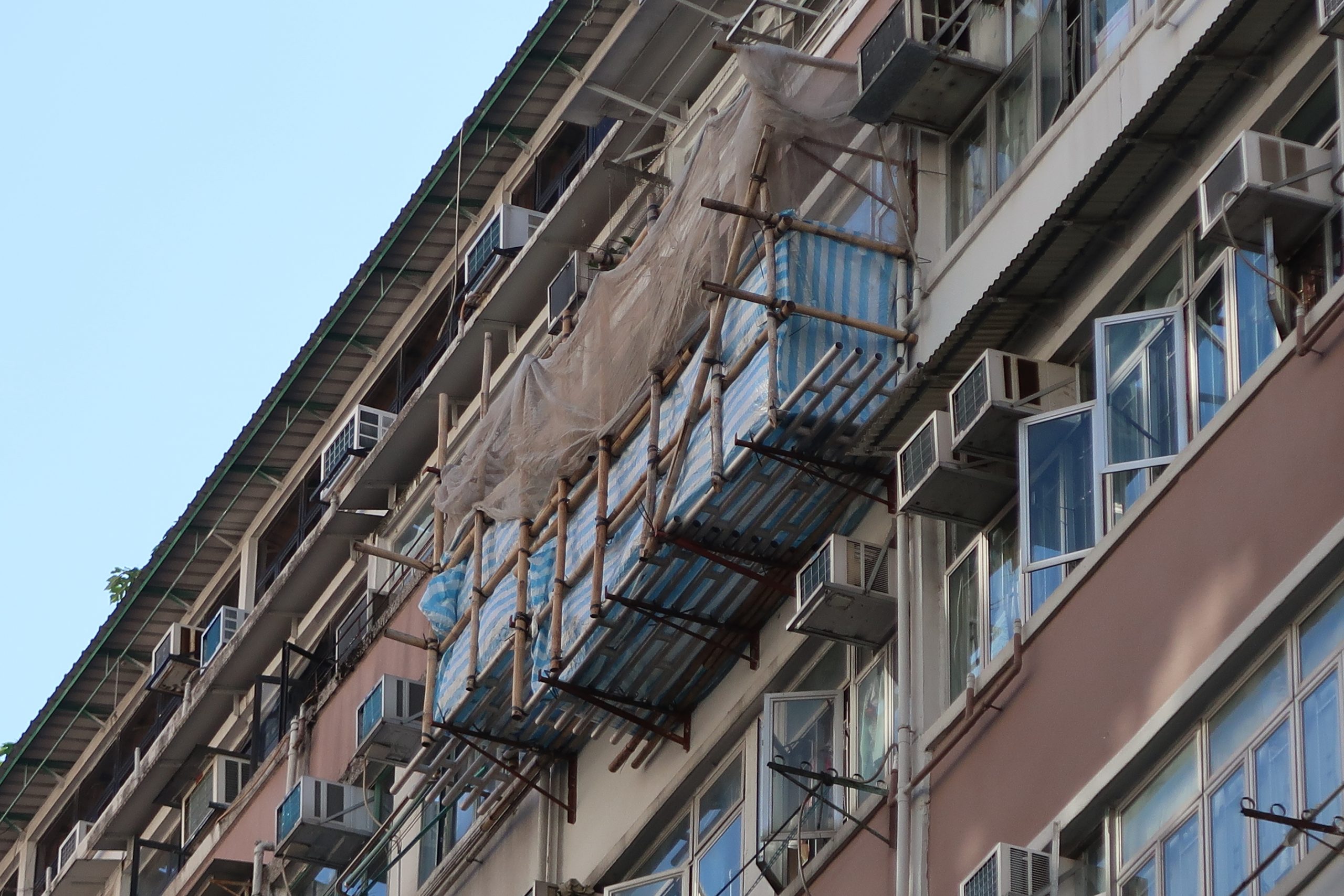
“Metal is too heavy for that,” Kwok said.
Crolla said bamboo scaffolding can be built for all types of buildings with various geometries and on different terrains, offering great flexibility that steel scaffolding cannot achieve to the same degree.
“It has been performing exceptionally well in its area of expertise, so I don't understand why people are trying to change it,” he said.
《The Young Reporter》
The Young Reporter (TYR) started as a newspaper in 1969. Today, it is published across multiple media platforms and updated constantly to bring the latest news and analyses to its readers.
Tai Po fire death toll rises to 151 as more bodies are discovered
Baptist University puts up barriers hiding memorial messages and public demands for Tai Po fire


Comments