
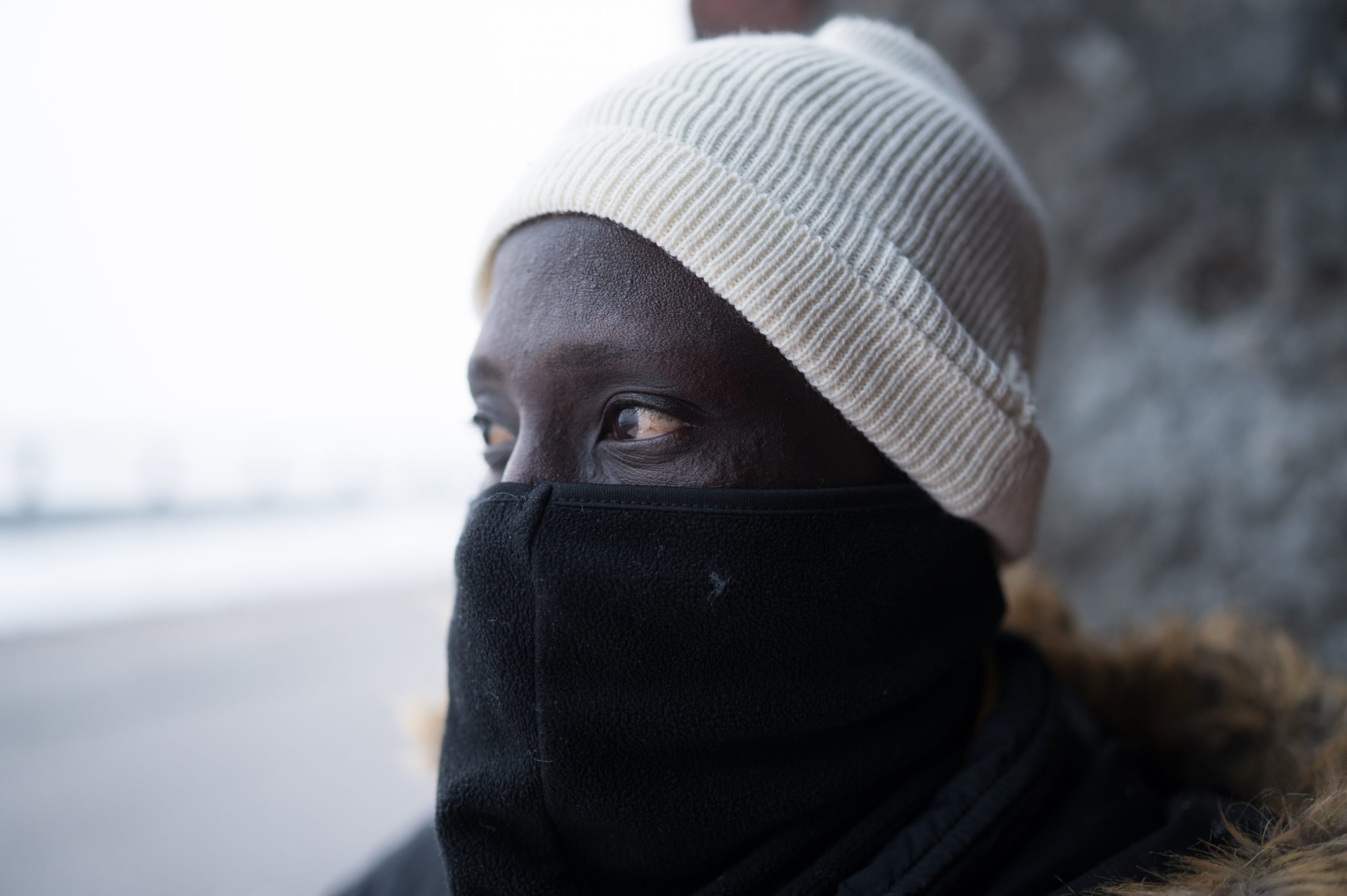
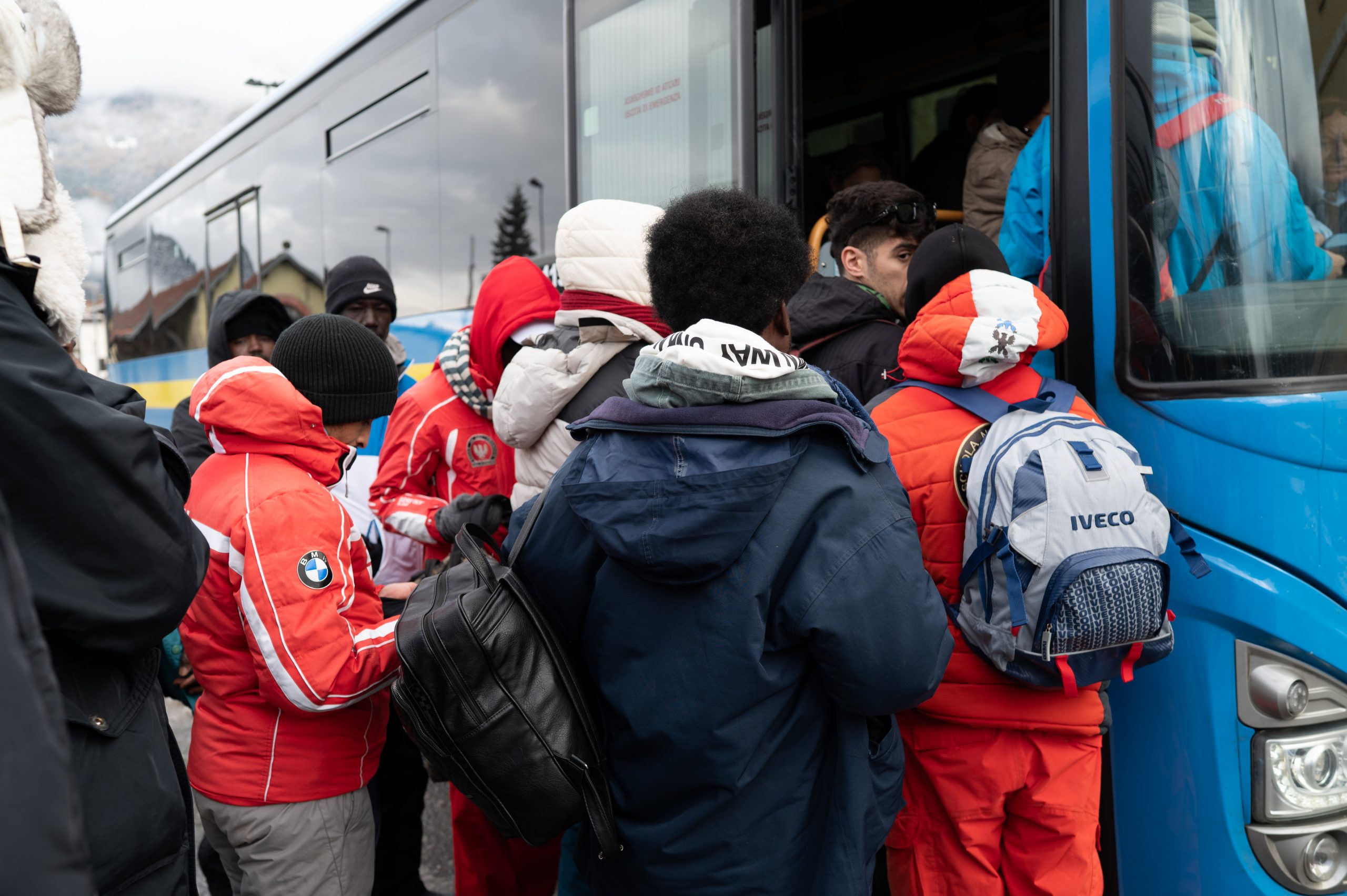
“Good luck. Danger – call 112,” a volunteer from a refugee shelter reiterated to a group of around 15 migrants at the bus stop in Oulx, an Italian town near the border with France, on Dec. 4, 2025.
To avoid being caught by the French police when they crossed the border, these migrants were planning to ascend the 2,000-metre Alps to reach France that night. Others have died on this same route before.
If these migrants get in trouble in the mountains, emergency operators will put them in touch with the Italian Red Cross to save them.
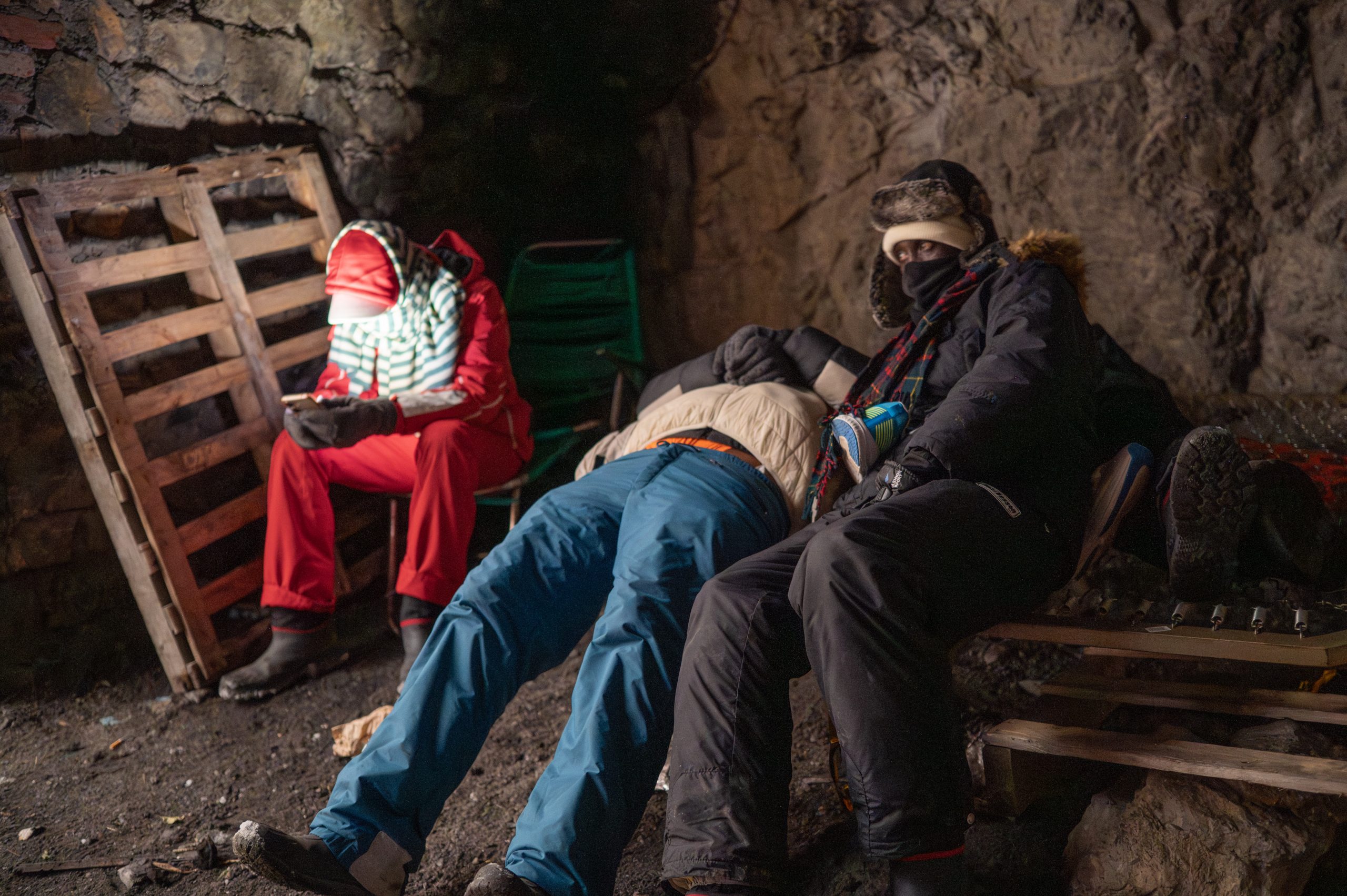
An hour later, their bus arrived at Claviere – a small Italian Alps village near the French border – and the group began its climb into the mountains. Soon they found a shallow mountain cave, and they huddled inside to rest.
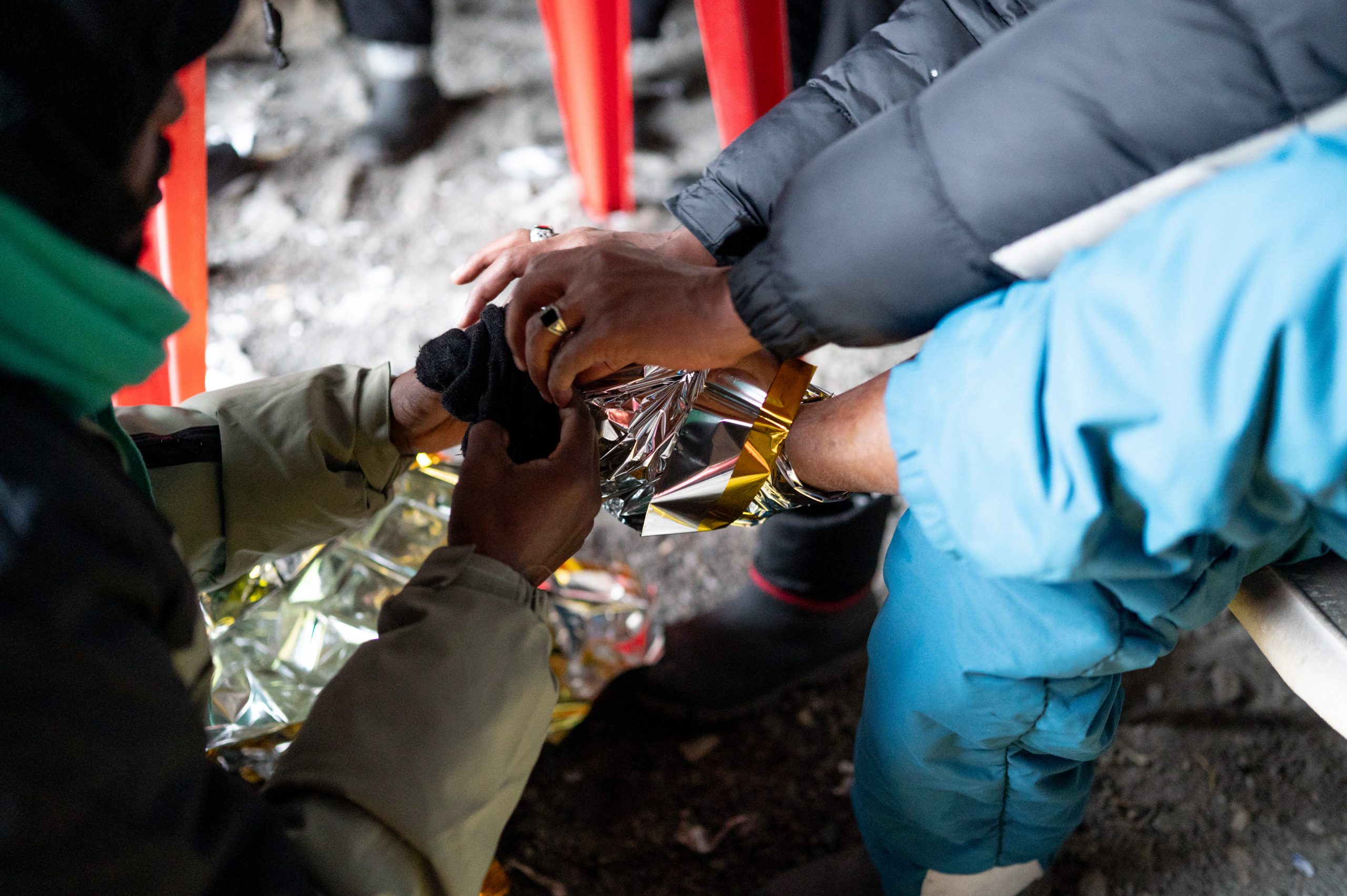
It was below freezing. They wrapped their limbs with thermal blankets; some had bread with an energy drink; others lay on the floor for a nap.
The mountains that claimed lives
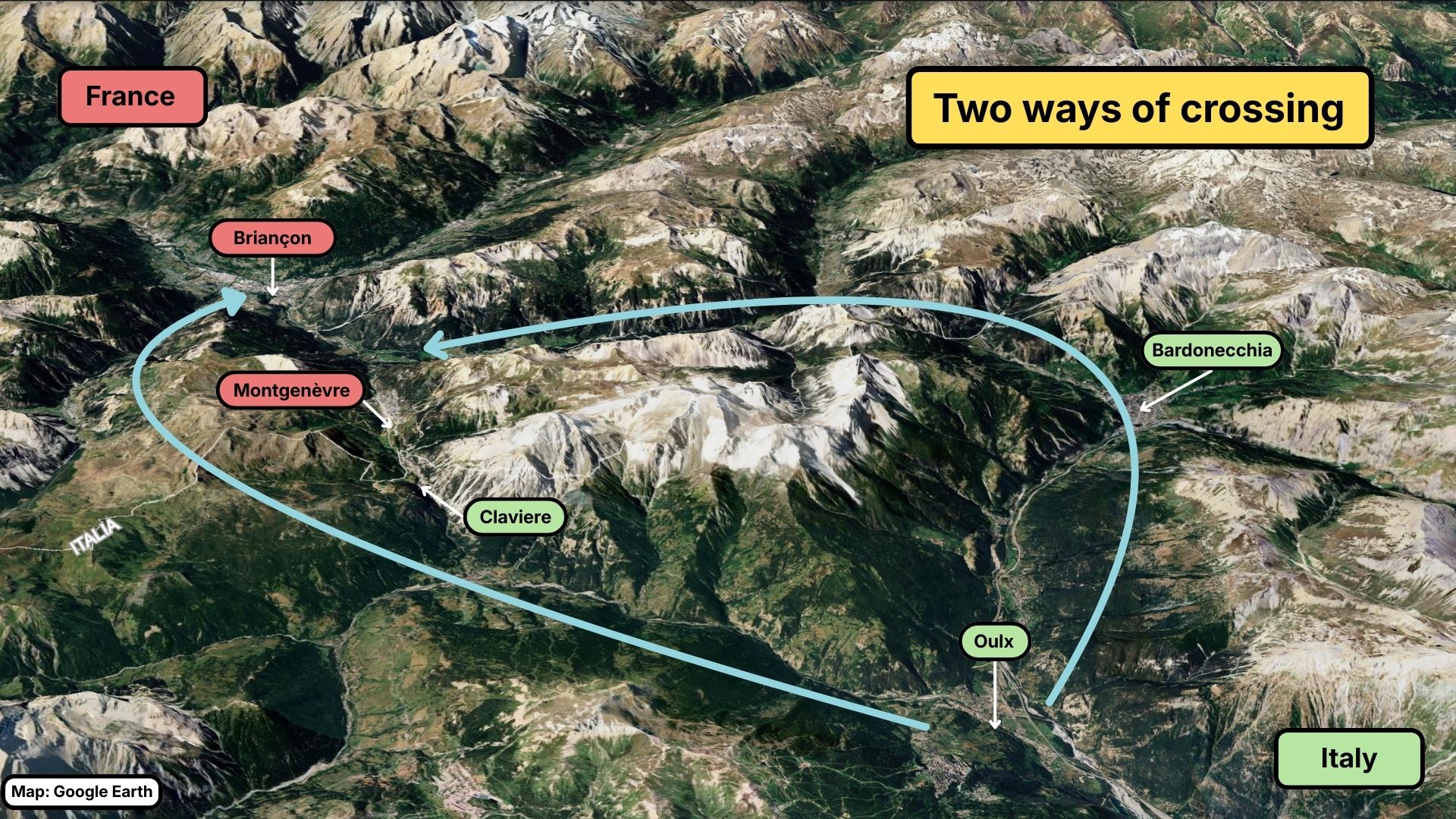
Thousands of migrants each year brave the mountain passes from Oulx in Italy to Mongenèvre in France to avoid police. Since the reintroduction of border controls by France after the 2015 Paris attacks, pushbacks by French border police to migrants in the Hautes-Alps region have become routine, even though denying access to asylum seekers is illegal under EU law.
In early December, I visited Rifugio Fraternità Massi, a refugee shelter in Oulx, to report on African migrants. Oulx is the major transition point prior to their departure to either the more popular, southwest town of Claviere or the northwest town of Bardonecchia before crossing the border.
The around 30 sq-metre reception was filled with chairs; drawn pictures in English, Arabic and other languages with various countries' flags were stuck onto the walls; I observed around 20 migrants inside the shelter each day. Most of them came from Africa.
Most of them are escaping from war and unemployment in Africa. They already had crossed the dangerous Mediterranean Sea on rubber boats and now arrived in the upper part of Italy.
Jessica Ostorero Xhixha, a rescuer and spokesperson for the Italian Red Cross, estimated a hundred migrants try to cross the mountains to France daily.
“By these days we have just a few 20, 25 migrants every day, but sometimes we have more, like two weeks ago. We are like a hundred every day,” she said.
In 2025, Xhixha said most of the migrants were single men and children from Sudan, Somalia, Ethiopia and Eritrea.
For English-speaking Africans such as the Sudanese, they hope to find better language inclusiveness and income in the upper parts of Europe, such as Germany. Crossing the Alps to France means they face both enormous physical and legal challenges.
From Claviere, migrants walk for around 20 kilometres for eight hours to the French refugee shelter Refugees Solidaires, in Briançon, considered safe from border police pushback.
This mountain pass has claimed at least 125 migrants’ lives since 2015, according to Pacte, a French research institute.
The Italian Red Cross started rescuing injured and missing migrants in the Hautes-Alps in 2018. Xhixha said many migrants underestimate the risk of the crossing. She said some have never seen snow before in their lives.
Around one in five migrants suffered musculoskeletal injuries, like a sprain or bone fracture, and one in ten sustained frostbite in winter, according to Tous Migrant, an advocacy group based in France.
“And for other nationalities like Afghanistan, Pakistan, Iran, they always tell us, ‘but in my own country, we have the highest mountains’. I know that but they didn’t think about the risk,” she said.
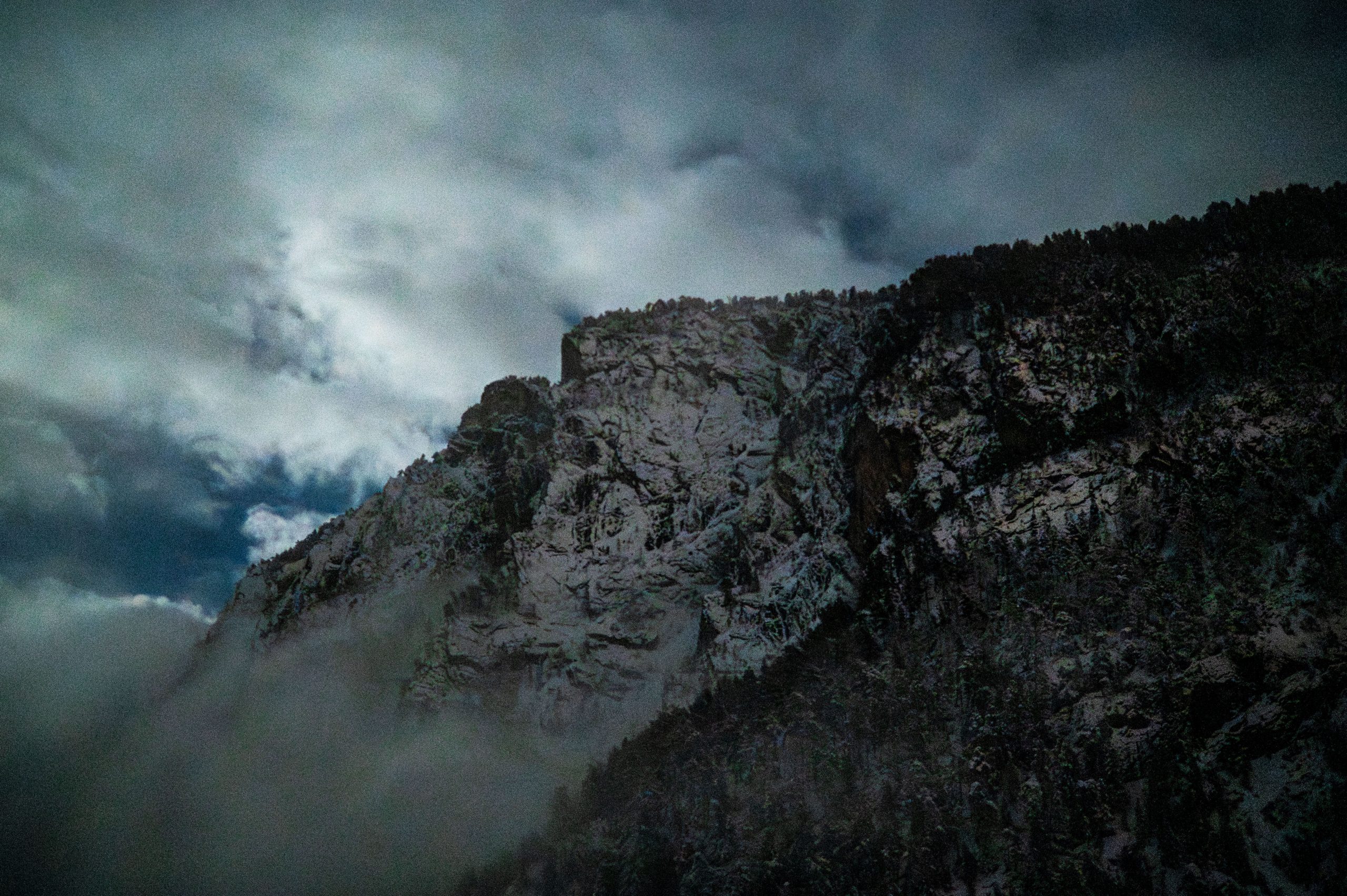
That December night, I followed the group of 15 refugees from Oulx to Claviere and documented their journey prior to their crossing of the border.
After hiding in the cave until the sun set around 6pm, the group of migrants split into three: two started their journey, heading off in different directions to lower the chances of getting caught by border police.
Four Sudanese men – Abraham, Michael, Muhammad and Hamazan – stayed behind.
Abraham and Michael had already been stopped once by the French police at the border and were sent back to Italy. The police said they had seen them getting off the bus in Claviere. Now, they are trying again.
To avoid being spotted easily, the four men waited for two more hours inside the cave.
It was expected to drop to -7°C around midnight. Snow blanketed the mountains, and the only sound came from droplets striking the cave floor — plink, plink, plink.
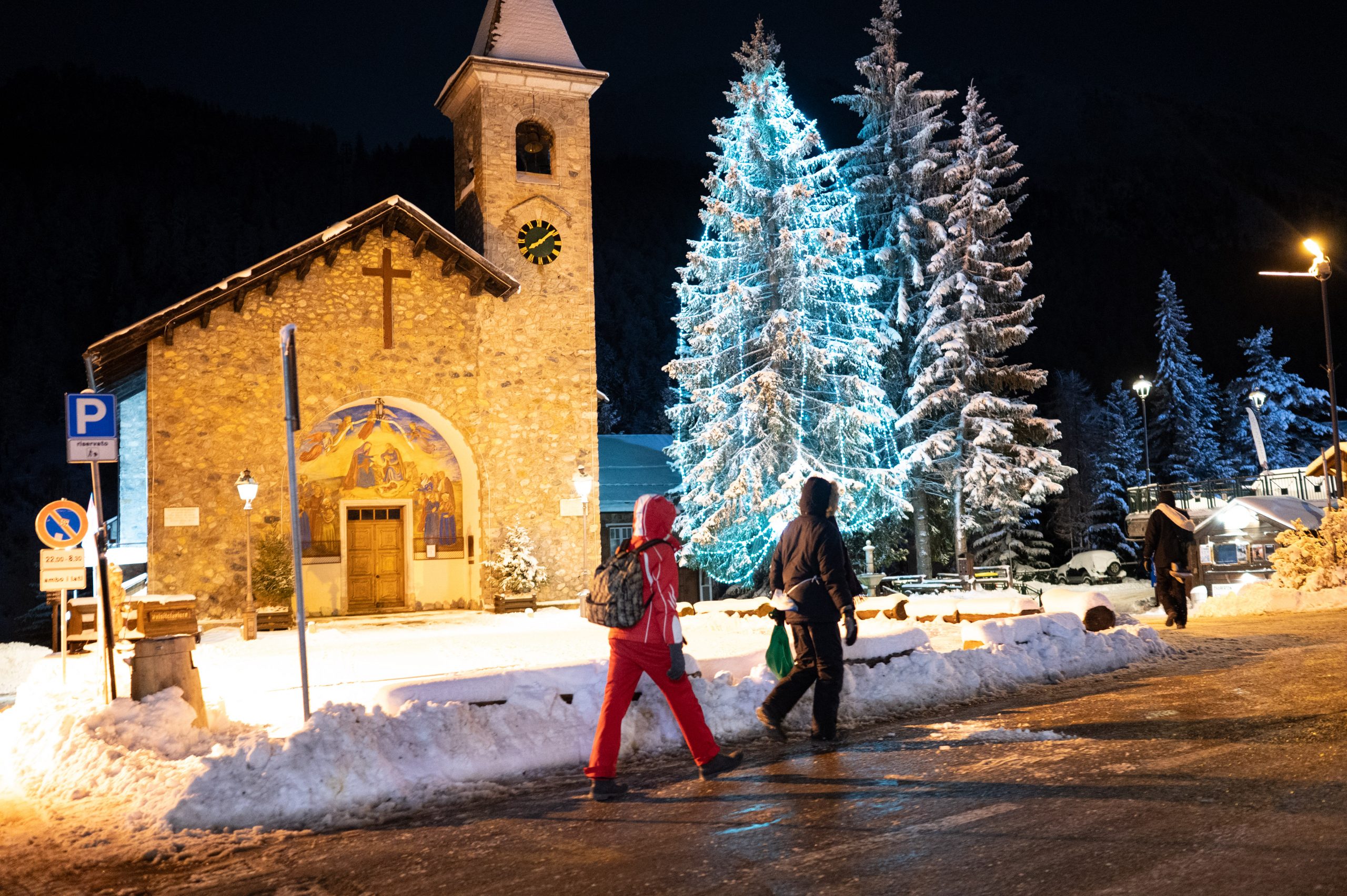
As the clock hit 8pm, they left the cave to begin their journey. They crossed highways, passed wood houses and a church, then vanished into the woods covered in deep snow.
Law violations at the Alpine Border
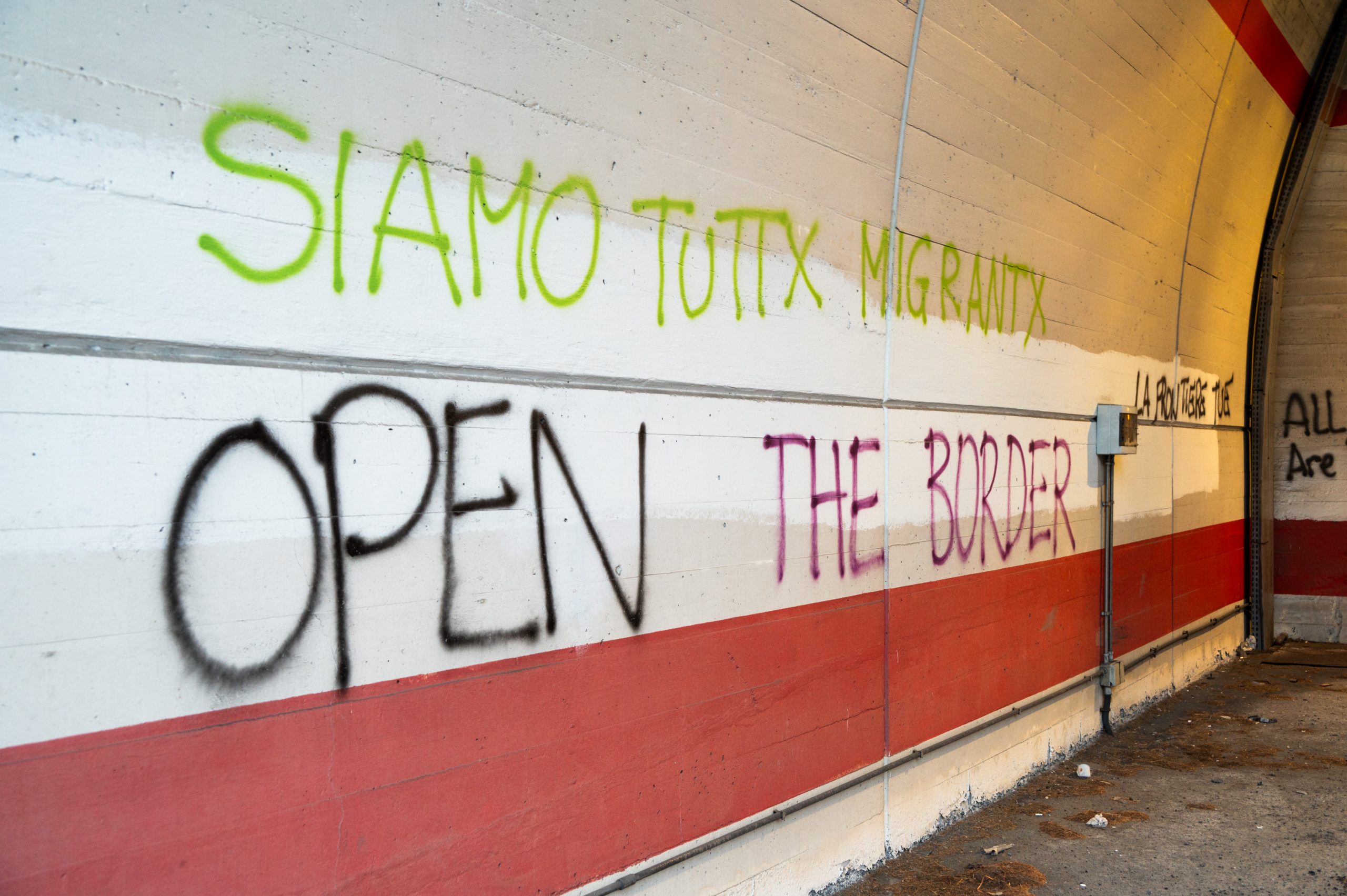
In Oulx, legal advisor Silvia Chicco from Associazione per gli Studi Giuridici sull’Immigrazione, a law association related to migration, advises migrants about their right to apply for asylum. “People know they need protection,” she said, “but they don’t know how to ask for it.”
The right to asylum and the right to subsidiary protection are guaranteed in the EU by Article 18 and Article 19 of the EU Charter of Fundamental Rights. That means that EU countries, like Italy and France, cannot refuse entry to migrants seeking asylum.
The Court of Justice of the European Union in 2023 confirmed this, ruling that France cannot use “refusal of entry” at an internal Schengen border as a shortcut to remove people, migrants in this case who have the legal right to apply for asylum. The French Council of State later supported the decision in February 2024.
According to the French Doctors of the World, between February and November 2024, migrants who presented themselves as asylum seekers were mostly admitted into France through the Montgenèvre border.
However, they observed “a very sharp increase” of pushbacks after November 2024.
In 2024, 4,562 people were arrested by the French border police in Montgenèvre, according to the French government. These people are sent back to Italy and most of them are trying again, Chicco said.
Chicco links the change to the French politician Bruno Retailleau, the appointed Minister for the Interior from September 2024, who has called for “less immigration, more security".
“What happens depends on which policeman they meet. Sometimes they listen; sometimes they don’t,” she said.
From Sudan to the Netherlands
Abraham, 20, and Michael, 21, have been friends since school in Sudan. They fled for safety after the outbreak of the 2023 Sudanese civil war.
“In our country, there is no hope at all. We lost everything back in our country,” Abraham said.
The two friends endured 18 months in Libya, escaping traffickers and kidnappers before reaching Italy after eight failed attempts across the Mediterranean.
In Turin, Italy, they tried to attend local school but struggled with Italian language. They eventually decided to head to the Netherlands, where English is widely spoken.
“I faced a lot of difficulties. This one [crossing the mountains] even seems easy to me,” Abraham said.
That night, the four men hiked straight uphill in the snow to reach the French border. The climb was treacherous. Muhammad slipped twice on a snowy slope, later he decided to give up, was rescued by the Italian Red Cross and was brought back to Oulx.
The other three continued and soon they were over the border. French border police roamed the woods looking for migrants, but they were lucky and slipped into France unseen.
I stayed on the Italian side and bid them farewell. On the afternoon of Dec. 5, Abraham called me from France: they had made it. After climbing through the Alps overnight, they reached Refuge Solidaire in Briançon, France, and later took a train to Paris, then the Netherlands.
They applied for asylum, rested for around a week and are now waiting for an interview for the asylum application. If successful, they can receive a resident permit and stay in Europe.
A Christian, Abraham said his faith in God supported him through the journey. “If you trust God, everything is going to work out,” he said. Still, he said he needed to take a rest.
“This is a game. We have to try one more time. That is all,” Abraham said, the other migrants agreeing with him.
《The Young Reporter》
The Young Reporter (TYR) started as a newspaper in 1969. Today, it is published across multiple media platforms and updated constantly to bring the latest news and analyses to its readers.

Kowloon City's Tei Mou Koon closes after 42 years in business

Dry stall rent reaches three-year high in lunar new year fair



Comments