
Driven by Saudi Vision 2030, Saudi Arabia is opening new doors for expats, but challenges remain: cultural differences, language barriers, and visa regulations.
RIYADH, Saudi Arabia Jan 23 – Jamie Chou, 38, lies in bed at her home in Taiwan, cradling her newborn daughter. Having recently been laid off just after a five-month maternity leave, though not because of it, she scrolls through LinkedIn, applying for jobs all over the world. Suddenly, a message lights up her screen: a Saudi company is offering her the role of chief marketing officer.
It’s not the first time Chou has received job offers from the Middle East. With a master’s degree in business and 15 years of marketing experience, she is an attractive candidate.
If this had happened in 2014 when she had just graduated, Chou said she would have rejected the offer without hesitation because of gender discrimination in Saudi Arabia. But now, with restrictions on women relaxed, one of her female classmates from her master’s program, who is a single mother, is still able to have a thriving career there with a kid.
Chou accepted the offer after flying to Riyadh and discussing the opportunity with the company. In 2025, she moved to Saudi Arabia with her husband and one-year-old daughter.
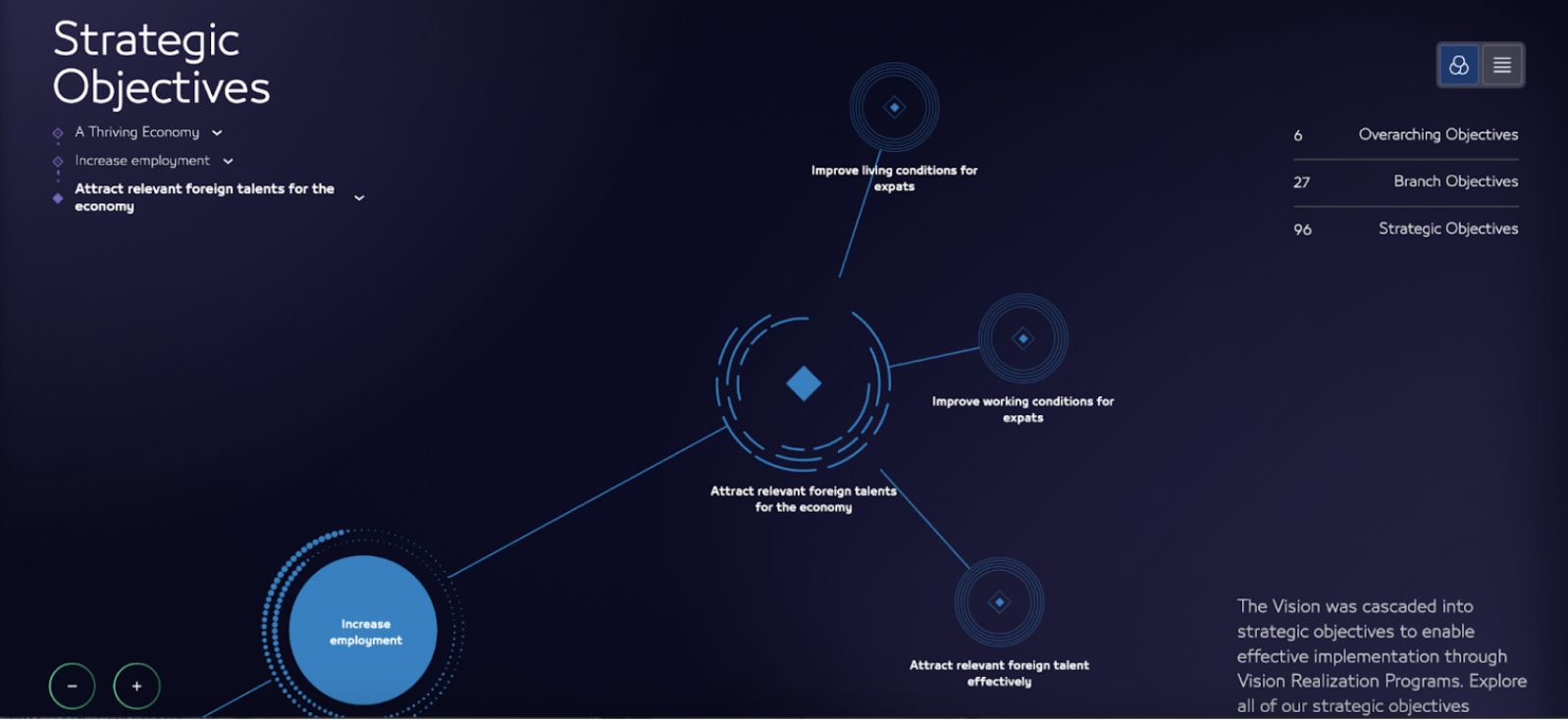
Attracting foreign talent is part of Saudi Vision 2030, a long-term strategy launched in 2016 by the Saudi government to promote economic diversification and development. While the kingdom promises new opportunities and a more open society, expats say a truly open, welcoming work environment is still a work in progress.
Chou said she still remembers when she tried to look up the company, she found almost no information.
“Is this a scam? Could I be kidnapped after I arrived in Riyadh?” she said, torn between a lucrative offer and a leap into the unknown.
Salary plays a big factor motivating Chou to work in Saudi Arabia. Chou’s current salary is 60% higher than her last job salary when she worked in Asia. This gives her a better quality of life: she can rent a villa downtown.
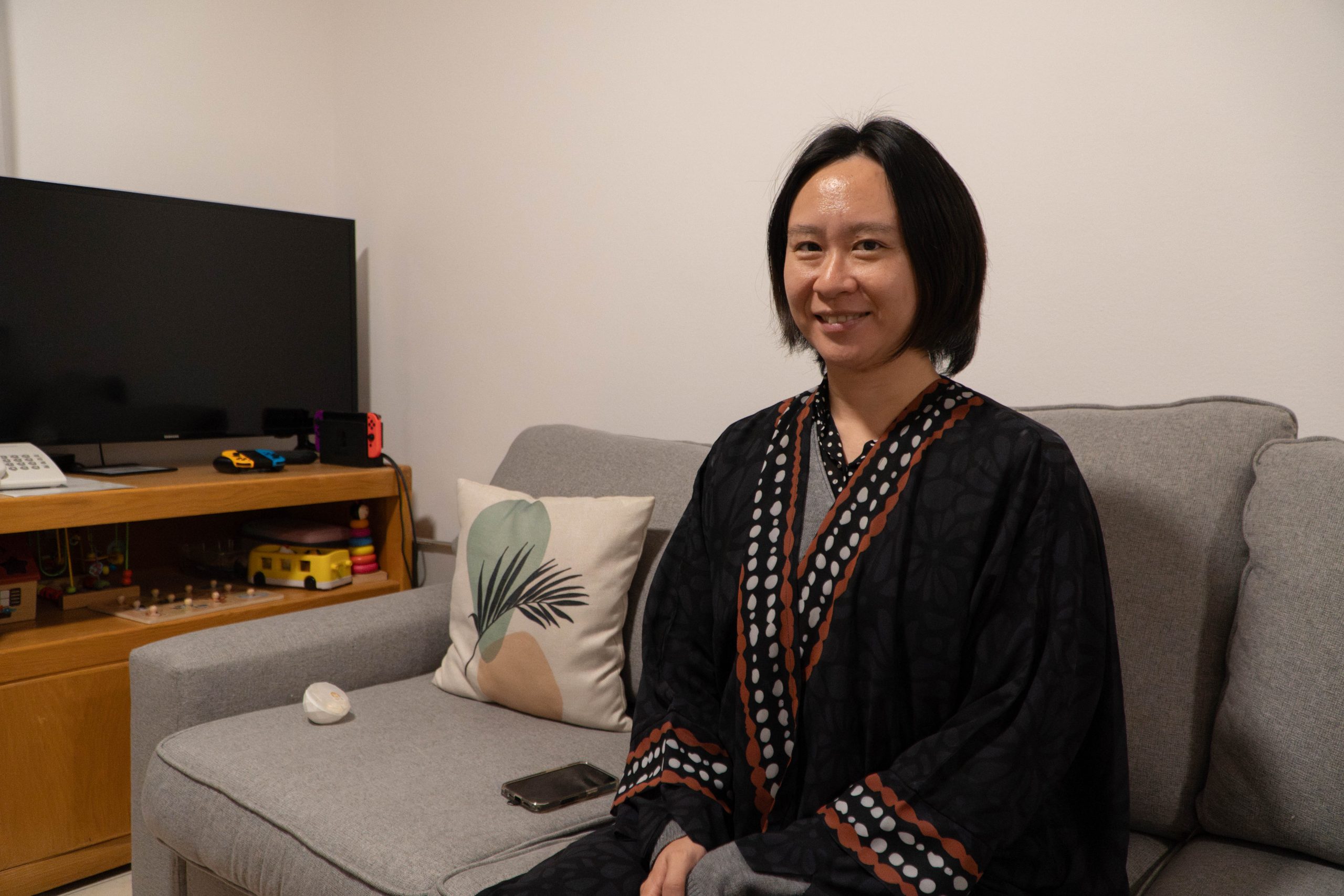
“I want to save more money for my retirement, even if this working experience is likely to be the final stop in my career because the market in Saudi Arabia is very different from Taiwan,” Chou said.
Chou works from 10am to 6pm Sunday to Thursday, which allows her to spend more time with her daughter.
“In the morning, I have time for breakfast and play with my daughter for a while before going to work,” she said, “I also feel more comfortable raising children in Saudi Arabia than in Taiwan because there are many families with young children.”
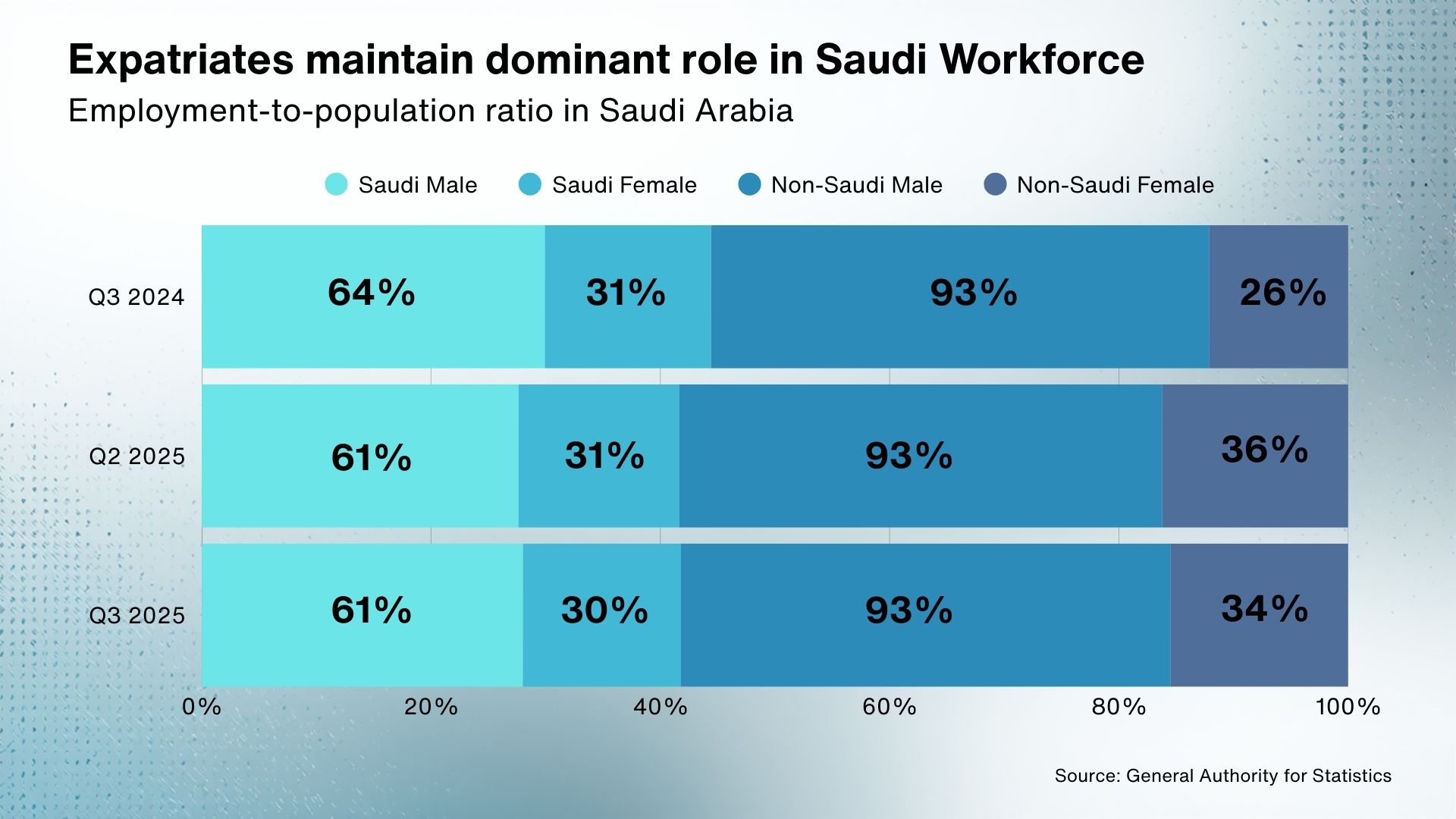
The number of non-Saudi residents makes up 44.4% of Saudi Arabia’s total population, reaching 15.7 million in 2024. Among these non-Saudi residents, women only account for 22.8%.
Although Chou is more familiar with life in Riyadh after one year, she said she was very anxious in the first six months because of the different work culture.
“When I worked in Taiwan, meetings usually had an agenda set in advance. Everyone knew what would be discussed and what they would say,” she said. “But it’s different here. My local colleagues are more relaxed and don’t have a set meeting routine. Instead, they bring up issues as they think of them.”
At first, Chou found it frustrating because she is eager to get things done quickly while others may not share the same mindset, but now she gradually adapted to this difference, she said.
“I learned to relax and tried my best to guide the discussion toward the main points. I had to adjust my own mindset, not to always feel tense,” she added.
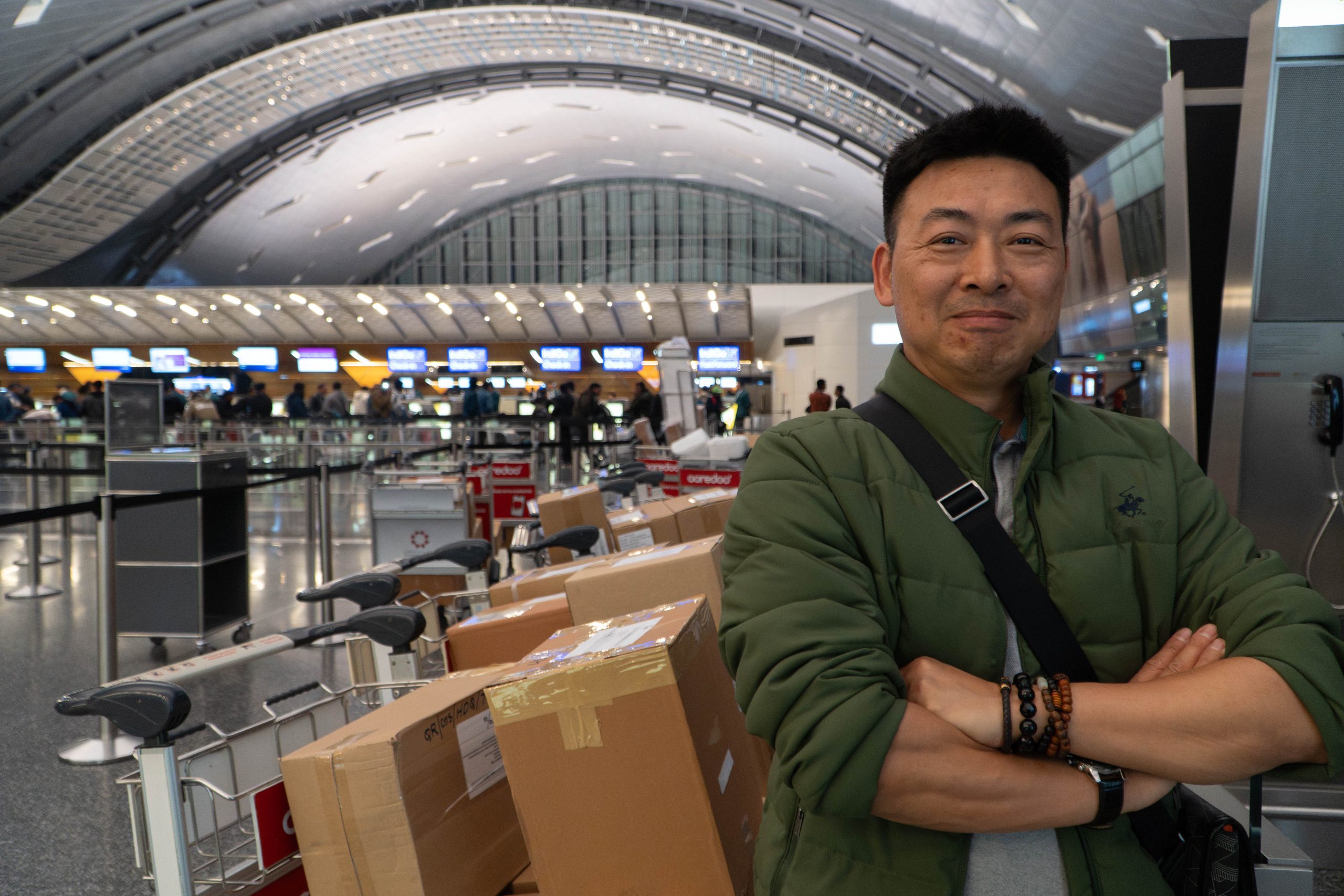
“After years of dealing with Saudis, I have realised that a slow pace is part of their character,” said Penny Pan, in his 40s, a tour guide for a Chinese travel agency based in the Middle East.
Pan began his career in the Middle East in 2009. He has been working in Riyadh for three years to expand the company business.
According to the Saudi Arabia Census 2022, there are 14,619 people from mainland China and 1,031 people from Taiwan living in the Middle East’s largest economy.
“Muslims often say, ‘Leave it to Allah,’ which means accepting Allah’s will and letting things be. Saudis are generally unhurried,” he said. “Sometimes, when Saudis feel tired, they say, ‘It’s too hard, I give up.’ But as a working partner, I am eager to solve problems quickly.”
Language also remains a significant challenge in his work, as Saudis’ English proficiency is relatively low compared to other Middle Eastern countries such as the United Arab Emirates and Qatar, which opened up to foreigners much earlier, Pan said.
“For international visitors or professionals, this is an issue. If they want to bring in talented people or attract foreign technical and management expertise, they can’t simply expect others to learn Arabic,” Pan said, hoping that English skills will improve to facilitate better communication.
Avo Lee, in her 30s, from Taiwan, works as a Chinese teacher in an international school in Riyadh. Lee first came to Saudi Arabia not for a job, but for love.
Lee was working in international trade for 15 years, mostly with Middle Eastern clients. When she was in the coastal city of Jeddah during the pandemic, Lee met her future husband, who is from Yemen. Lee moved to Saudi Arabia when they were married three years ago.
To maintain legal residency in Saudi Arabia, expatriates like Lee need to have a valid residency permit called IQAMA, an official residency and work permit for foreign nationals in Saudi Arabia. It is also required that IQAMA is tied to the employer and must be renewed annually by the employer.
Lee got her current job position through LinkedIn. As her IQAMA is tied to the international school, the school also provides a free apartment and her roundtrip flight between Taiwan and Saudi Arabia.
“The school offers a good salary and various subsidies, which allow me to live well,” she said. “I like being a teacher because I get long, fixed holidays each year. I can go back to Taiwan to spend time with my parents and friends. Other kinds of jobs rarely offer this benefit.”
In 2024, women represented 12.1% of the workforce, while Saudis comprised 20.6% of all employees, according to the officials.
Despite having her dream job, Lee said she applies for other teaching jobs because she is afraid of being replaced.
“The person who held this position before me was Egyptian. Children don't need to learn advanced Chinese and simple Chinese is enough,” she said. “Since so many people can speak Chinese, it is not necessary to hire a Chinese person and give them so many benefits.”
For those who want to work in Saudi Arabia, Lee said she thinks they need to identify their unique strengths so they will not be easily replaced.
“Riyadh is a city that keeps growing, but you never know how long you can stay here,” Lee said.
“After all, we are not from here, and you never know when you might be replaced by Saudis, since they require a lower salary than we do but can do the same job,” she added.

For Pan, today’s Saudi Arabia feels much like the UAE did two decades ago, as its economy steadily develops.
“Before I came, I thought the country was closed and backward. But I gradually discovered many pioneering aspects. Now, Saudi Arabia is developing according to its own circumstances and at its own pace,” Pan said recalling his first impressions of Saudi Arabia.
He sees Saudi Vision 2030 as ambitious, in which the government has introduced many good policies, but ordinary people are not yet ready to embrace the world with a more open attitude.
“The general public hasn’t reached that point yet, and I think the country still needs to educate them further. It will also take time for them to learn and grow,” Pan added.
“Although there are still significant gaps in basic infrastructure, we are waiting and hoping that changes will come once these foundations are in place.”
《The Young Reporter》
The Young Reporter (TYR) started as a newspaper in 1969. Today, it is published across multiple media platforms and updated constantly to bring the latest news and analyses to its readers.
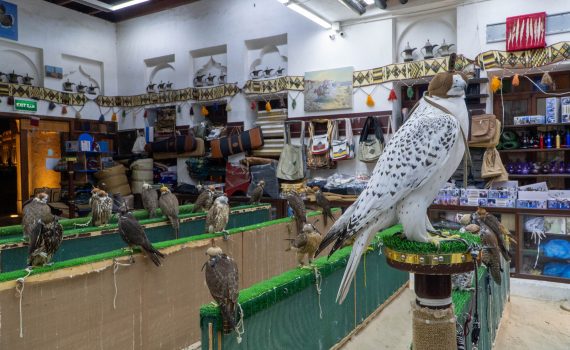
Doha’s Falcon Souq keeps a century-old tradition alive

GBA forum: Hong Kong firms urged to tap mainland demand amid sluggish retail recovery


Comments